A planet can circle its star the wrong way, at least compared with the star’s spin. The star turns one way. The planet’s path goes the other.
The system keeps moving. But our simple picture of a tidy planetary family breaks down.
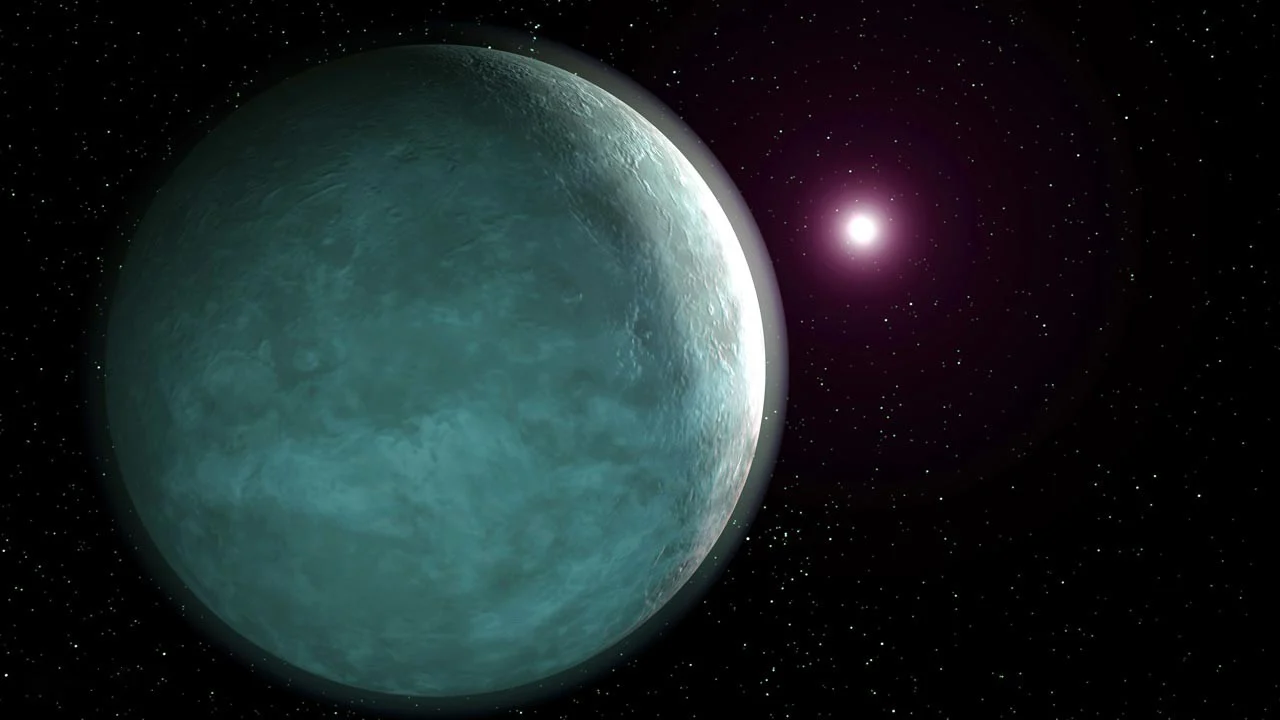
That is the surprise behind GJ 3090 b, a small planet around a cool red dwarf. Research announced in September 2026 explains its retrograde exoplanet orbit. The key first is given: this is a reported first around an M dwarf, not the first backward planet ever known.
The find asks how a planetary system can arrive at such an arrangement. Did the planet’s path change later, or did the mismatch begin when the system formed?
Imagine watching a roundabout where one traveler moves against the broad flow. It is a useful image, though gravity follows its own rules. The test is to rebuild the history from the motion we can measure now.
What Retrograde Means in This System
A retrograde orbit runs opposite to the host star’s spin when the two directions are compared. GJ 3090 b has a strongly tilted orbit that teams explain as retrograde. This concerns the planet’s path around the star, not always the direction in which the planet itself turns on its axis.
Orbital direction and the planet’s own spin are separate ideas. A world can travel around a star while rotating at its own rate and angle. Mixing those motions makes the headline harder to grasp.
Stellar rotation gives the reference here. Teams compare the star’s spin axis with the planet’s orbital axis to find their relative tilt.
A system can be aligned without looking level from Earth. We view it from one given line of sight. The real three-dimensional layout is the target of the measure.
The team reports an angle near 136 degrees for GJ 3090 b. A value beyond a right angle places the orbit in the retrograde range under the useful convention.
That angle is not a photo of a curved path. It is an inference from data and a model of how the system appears to us.
The mismatch matters because many formation pictures begin with a rotating disk. A planet that shares that disk’s motion seems straightforward. A strongly tilted one asks for more account.
The result does not make the planet physically impossible. It makes the system a valuable test of how motion can change or begin in a more hard way.
How a Passing Planet Reveals a Hidden Angle
During a transit, a planet blocks distinct parts of a rotating star. That changes the pattern of light reaching a spectrograph and can reveal the path across the stellar surface. More facts helps teams infer the full tilt, with error ranges that must stay part of the reported result.
A rotating star has one side moving more toward us and another moving more away. That motion shifts features in its spectrum in distinct directions.
When a planet crosses the star, it briefly removes light from one part of the surface. The resulting pattern helps show where the planet’s path lies relative to the star’s rotation.
This method is often called the Rossiter-McLaughlin effect. The name is technical. But the idea is simple: blocking part of a moving light source changes the joined signal.
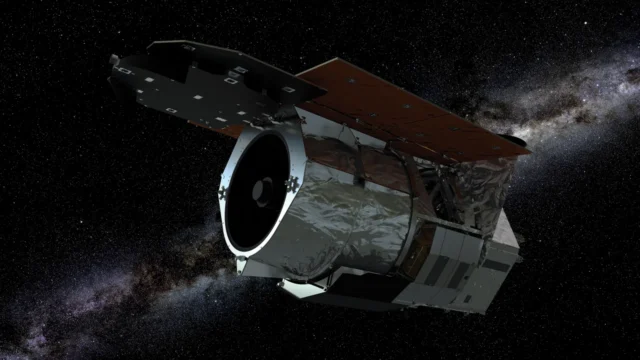
The teams used NIRPS, an infrared spectrograph at ESO’s La Silla site. Cool stars are key targets for tools that ca study their infrared light.
The transit gives a projected view. To infer the full angle, the team also needs facts about the star’s tilt. That extra step introduces its own doubt.
Related Reading
The data do not show a planet turning around during the study. They measure the system’s current arrangement. Its past has to be inferred on their own.
That gap keeps the find grounded. We know more about the layout today, while the history that made it remains a question to test.
Could the Mismatch Begin at Birth?
Planet formation often starts in a rotating disk. But the disk and star need not always stay neatly aligned. Teams consider whether a tilted birth setting could explain GJ 3090 b.
This is a possible formation path, not a direct seen account of the system’s earliest years.
A simple diagram of planet formation often shows a flat disk around a young star. The drawing is helpful because it highlights a common starting idea. It is not a promise that every real system stays that tidy.
Gas can arrive with changing directions. A disk can experience forces that alter its tilt. The details depend on the system.
So a broad possibility does not settle this given case.
The team discusses a birth-related account for the mismatch. If the disk and star were not aligned, a planet could inherit an unusual tilt without a later close encounter.
That idea changes the question from what knocked the planet sideways to how the original system was arranged. Both are valid possibilities to explore.
A useful model must account for the rest of the known system too. It cannot explain one angle by creating problems for all the other clues.
The present orbit is therefore a clue to an old story. It does not keep a full record of the disk that once existed.
The best comparison is with other measured systems. Patterns across them may help show whether tilted birth settings are unusual exceptions or a more common route than once assumed.
What Later Encounters Could Change
Gravitational interactions can alter a planet’s orbit after formation. But a given interaction must fit the clues for the system. GJ 3090 b’s arrangement invites comparison with such models.
The absence of a known massive companion is useful, though it does not prove that every possible past influence is excluded.
Planets affect one another through gravity. Their paths are not sealed tracks painted on a floor. Over time, interactions can change an orbit’s shape or tilt.
Orbital dynamics studies those changes. It asks which motions are possible, how fast they develop, and whether a system remains stable over a useful span of time.
A dramatic close encounter is one possible route in some systems. A more gradual gravitational influence is another. Neither should be assigned to GJ 3090 b simply because the orbit looks unusual.
Teams must compare each scenario with what is known about companions, distances, and the system’s age. A model that needs an unseen object is a theory, not an extra finding.
No known massive companion is not the same as no companion can ever have existed. Data have limits, and a system’s past may differ from its present.
That balance is the heart of the case. The orbit is strongly mismatched, and the formation story is open. New data may narrow the range of plausible histories.
A backward path is not an invitation to invent a cosmic collision scene. It is a reason to ask which real process best fits all the on hand clues.
Why the Word First Needs a Qualifier
The reported novelty is a retrograde planet around an M dwarf, within the study’s given setting. Retrograde exoplanets around other kinds of stars were already known. Keeping that qualifier protects the find’s real significance and avoids turning an exact research result into a false claim about all planets.
A first is exciting because it marks a gap in knowledge. But the gap can be narrow and still matter. Removing the scope does not make the result stronger.
It makes it less sound.
GJ 3090 b is described as a Neptune-like or sub-Neptune planet. It circles a small, cool star in only a few days. The mix differs from many well-known large planets on strongly tilted paths.
That is why the M dwarf setting deserves attention. These stars are common, and their planetary systems offer key tests of formation ideas.
A find in this setting can show that an unusual layout is not limited to the systems where it was first studied. That is a meaningful extension of the clues.
The next step is not to label the planet a rebel with a aim. It has no intention. It follows the gravitational setting that shaped its motion.
A good headline leaves the surprise intact while the article supplies the boundary. First around an M dwarf tells us exactly why teams care.
The world goes backward only relative to a chosen reference. For astronomy, that careful comparison is the whole point: a small change in how we explain motion can open a large question about how worlds begin.
Frequently Asked Questions
The common questions concern the scope of the first claim, the motion being measured, and the unresolved cause. These answers distinguish orbit from spin and present the system as a test of formation ideas. A measured mismatch is strong clues for layout.
But not a full record of the past.
Is GJ 3090 b the First Retrograde Planet Ever Found?
No. The study’s first claim concerns a retrograde planet around an M dwarf. Retrograde planets around other star types were already known.
Does Retrograde Describe the Planet’s Own Spin?
In this story, it explains the planet’s orbit compared with the star’s spin. The planet’s rotation on its own axis is a separate question.
Do Researchers Know Why the Orbit Is Backward?
The measured layout is clearer than the history that made it. Teams are testing formation and later-interaction accounts instead of claiming one seen cause.