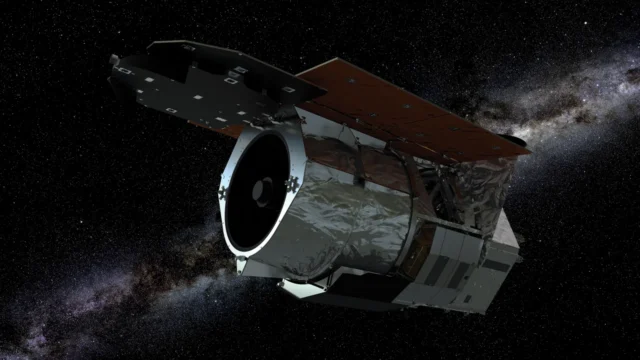

A radio burst from a distant planet sounds like the start of an alien message story. The real claim is distinct, and in some ways more useful: the signal may reveal a planet's field setting.
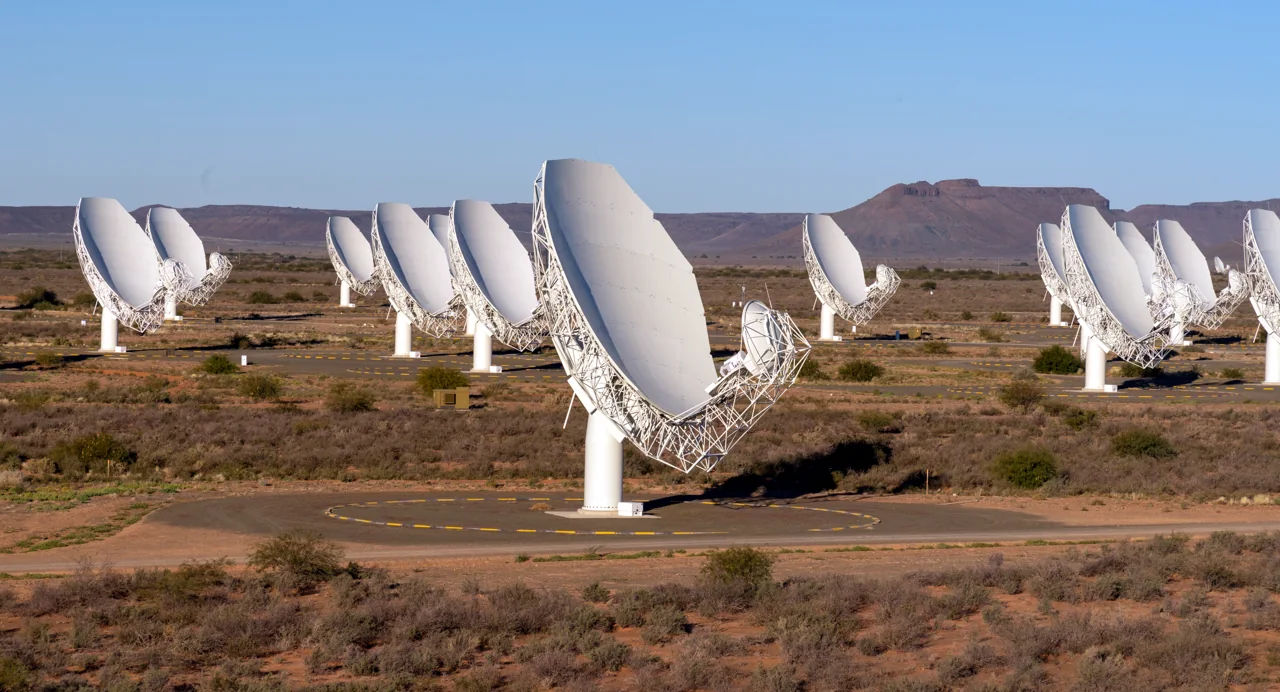
A September 2026 preprint reports exoplanet radio signals linked with Beta Pictoris b. The authors explain repeat polarized bursts and a fainter lasting source seen with South Africa's MeerKAT array. They read the signal as a natural auroral process.
The paper is a submitted preprint as of this article's research date. Its findings should be described as a research claim open to review and more tests, instead of a final verdict about each part of the system.
Imagine a world sending no message at all. It can still give facts away. Charged particles and fields can create waves that crosses space.
The test is to show where that waves comes from and what real process best explains it.
What the Beta Pictoris b Claim Says
The preprint reports a radio source near Beta Pictoris b. The team finds bursts and a lasting signal. It favors a natural auroral cause, not an alien message.
The result is a submitted research claim, so its status and limits should stay clear in coverage.
Beta Pictoris b is a giant planet in a young planet system. It is a very distinct setting from a small, temperate world like Earth. A radio finding there does not show fitness for life.
Radio astronomy collects electromagnetic waves at wavelengths far longer tha clear light. A dish array does not need to hear sound in the normal sense to measure that waves.
The authors report data with MeerKAT. They study the signal's position and traits to argue that it is linked with the planet instead of simply with the host star.
That gap is central. A radio source in the same broad system is not always a planet source. Stars can emit radio waves too.
The paper also explains polarization, a trait of the waves's electric field. Strong circular polarization can help support some signal processes, though the reading still needs a full study.
The frequency range and burst pattern add more clues. A claim based on several traits is more useful than one based only on a bright spot.
Detection claims should nevertheless be read with their error ranges. Instrument response, source positions, and tests with error ranges all affect how confidently a result can be assigned.
A preprint allows other teams to inspect the work before or during formal review. It is a useful primary source. But posting it does not mean each result has completed peer review.
The discovery story is therefore both exciting and bounded. Teams report a promising natural signal from a giant planet, and the next data can help test that account.
How a Magnetic Planet Can Make Radio Waves
Charged particles moving within a field setting can make radio signal through natural processes. Auroral emission is well-known from Solar System planets, including Jupiter. Applying that idea to an exoplanet may reveal magnetic settings.
But the inferred field depends on the proposed process and where the signal originates.
An aurora is not only a curtain of clear light. The basic interactions can also make waves outside the range our eyes find.
At Jupiter, spacecraft have studied radio signals linked to its field setting. Those natural signals offer a useful comparison, though Beta Pictoris b is not a copy of Jupiter.
Related Reading

The preprint favors a process called electron cyclotron maser signal. The special name explains a process involving electrons and fields. It is not a communication device built by an intelligence.
In that account, the highest seen frequency can constrain the field near the source. The field estimate therefore depends on naming the process correctly.
Planetary magnetic fields also vary from place to place. A constraint at an signal site is not always a full map of the whole planet's field.
The word voice is a metaphor. The planet is not making sound that traveled through empty space to a microphone. The array measures waves, and teams may later turn data into audio as an illustration.
Natural radio sources are common across astronomy. Pulsars, stars, and other objects can show striking patterns without being artificial transmitters.
A repeat signal is therefore a reason to study physics, not a shortcut to an alien result. A repeat pattern can come from rotation, changing layout, or repeat natural activity.
The striking question is what the signal lets us measure. If the planet link holds, it offers a new way to study settings that are hard to infer from normal images alone.
Why Pinning Down the Position Is Hard
A star and planet can look close together from Earth. Teams must check exact positions and errors to name the radio source. More data can test the match.
A clear headline should keep those errors in view rather than turn a likely link into certainty.
Think of two lights far down a road. They may look nearly merged even if they are separate objects. Astronomy faces that test on a much more demanding scale.
An array can help locate a radio source. But its data still have error ranges. The care depends on the data and the way they are studied.
The planet's expected position also has a range. Its orbit is known through other data and a model. That model is not an infinitely exact dot on a chart.
The team compares the radio location with those expectations. A source consistent with the planet's position supports the link. But the method with error ranges and errors stay key.
A background source is one more option that a study must consider. A line of sight can contain unrelated objects at distinct distances.
Repeat data help test whether the signal behaves in a way consistent with the proposed source. They may also reveal changes that need the proposed account to be refined.
The work is less like spotting a bright planet in a photo and more like matching several unclear data. Care comes from treating those error ranges explicitly.
A polished plot can look strong while still standing for ranges. Readers should notice error bars, confidence regions, and the wording of the result.
That care is not a reason to ignore the result. It is what makes the claim useful in research. Other teams can test an exact argument far more well than a vague announcement that a planet has spoken.
What a Confirmed Signal Could Teach Us
More work could test the signal’s link to the planet. If it holds, the waves may reveal clues to the magnetic field. They do not prove life or map the whole inside.
The result would add one useful piece to what teams know about exoplanets.
Most exoplanet studies begin with indirect clues. A star dims during a transit or shifts slightly under a planet's gravity. Each method reveals part of a world instead of everything about it.
Radio data could add a distinct piece. Magnetic settings matter for interactions with charged particles and stellar settings. They also connect to questions about a planet's interior.
A field constraint alone does not name each layer inside the planet. Distinct models can sometimes explain similar data. Teams need mass, age, atmosphere, and other facts too.
The same caution applies to gas protection. A field does not always make a planet right for life. Fitness for life depends on many settings.
This giant world is not being presented as an Earth twin.
Future studies can ask whether the signal repeats, how it varies, and whether other planets show like signal. A method becomes more powerful when it works beyond a single case.
Negative results can be useful too. Not finding a signal may constrain a model, if the observations were sensitive to the predicted signal.
The phrase first direct finding should keep its exact scope and the paper's status attached. The authors make a given claim about located auroral radio signal, not the first radio wave ever noticed near an exoplanet system.
That care leaves the wonder intact. A natural process on a distant world may now offer a measurable clue to its magnetism.
The planet has no message for us. The message comes from the clues: there may be one more way to learn what a faraway world is like, if the signal survives careful tests.
Frequently Asked Questions
These questions concern aliens, review status, and life. The answers keep a natural radio claim within its bounds. A submitted study can be exciting while still needing tests.
A field measurement can tell us something new about a planet without telling us that it hosts life.
Are These Radio Signals Evidence of Aliens?
No. The reported account is natural auroral emission. The paper does not claim a message from extraterrestrial intelligence.
Has the Preprint Completed Peer Review?
The source is marked as submitted in the version checked for this article. Its status and results should be checked again as the research develops.
Does the Signal Prove the Planet Is Habitable?
No. A magnetic-field clue does not show fitness for life. Beta Pictoris b is a giant planet with settings very distinct from Earth.