
A silk gown from a Han tomb can be so light that its survival seems almost as strange as the person buried beside it. At Mawangdui, fragile cloth, painted objects, and a strikingly preserved body brought an ancient household into sharp focus.
Lady Dai tomb secrets are often told as a mystery about a woman who looked recently dead after more than two thousand years. That is only the first doorway. Xin Zhui's burial also preserved clues to food, dress, status, belief, and the skilled work of people whose names we do not know.
The body deserves respect, and the objects deserve attention. Together they tell a richer story than a shocking headline about a perfect mummy.
A Han Burial With a Wider Household Story
Xin Zhui, often called Lady Dai, was buried at Mawangdui near Changsha during the early Han period. Her tomb formed part of a family burial site. Its objects give evidence of elite life and funerary practice, while her preserved remains offer a distinct kind of past record.
Mawangdui is not the name of one object or one body. It is a site with linked tombs and a large body of finds. Treating it only as the place of a famous preserved woman leaves much of the evidence out of view.
The early Han dynasty began after years of change and the rise of a new empire. The burial reflects an elite household within that world. It cannot stand for the daily life of everyone in ancient China.
But it can reveal what wealth and status made possible.
The Hunan Museum's display places the tombs within the history of early Han society. Its displays include clothing, lacquerware, manuscripts, music objects, and games. Each group adds a distinct kind of clue.
An object in a grave is not automatically a thing used in exactly the same way during life. Some goods may have been selected or made for burial. Teams ask about wear, form, substances, and placement to distinguish everyday use from a role in the grave.
That makes the household story more careful. We can discuss the range of goods and the work needed to make them. We should not invent an evening in which Xin Zhui played a specific tune or chose a specific robe unless a source actually records it.
Her name gives the story a human center. The goods widen it to include weavers, woodworkers, painters, scribes, and other skilled people. A wealthy burial preserves their labor even when it does not preserve their names.
The tomb therefore offers more than one kind of survival. A person, a family setting, and traces of many crafts remained together. Reading those layers keeps Lady Dai within history rather than outside it as a curiosity.
Why the Preservation Is So Remarkable
Lady Dai's remains survived in a very well-preserved state within a carefully sealed burial. Nested coffins and the tomb setting are central to discussions of that survival. The exact role of each condition is complex, so no single secret fluid or simple recipe should be treated as proven.
A tomb is a setting as well as a container. Air, water, temperature, microbes, and the substances around a body all influence what survives. Small contrasts can make very distinct results over a long span of time.
Nested coffins created layers around the burial. The substances outside them added more space from the nearby ground. That arrangement matters because it changed the conditions the remains experienced.
It does not mean each burial with a few coffins would preserve the same way.
Popular accounts often focus on a liquid found in the coffin. Its role has attracted interest, but a striking detail should not become an explanation for all cases. The whole setting needs study, including how the tomb was sealed and what happened within it through time.
The word mummy also needs context. People often picture a dry wrapped body when they hear it. Lady Dai's rare survival differs from that common image.
Related Reading

A broad label can help introduce the subject while still leaving room for the actual condition of the remains.
Survival is not the same as returning a person to life. Nor does it mean each tissue, object, or feature stayed unchanged. Time acted within the tomb even when some results seem striking to a modern viewer.
Scientific tests can add evidence about the body. But it cannot answer each question about the person. Health clues need their own careful reading.
A medical record is not a complete account of how someone felt or lived.
The most accurate wonder lies in the mix. A few conditions supported a rare survival. Grasping them asks for close work and measured claims, not a lost formula that modern science supposedly cannot begin to explain.
Silk and Lacquer Bring the Past Into View
The Mawangdui finds include delicate silk garments, manuscripts, painted coffins, and lacquer objects. These substances show skilled making and elite supplies. They also preserve ideas and images; their survival gives teams evidence that stone and metal alone could never supply about clothing, art, and written knowledge.
Silk changes the scale of the story. A stone monument can endure in the open. A light garment is far more at risk.
When fragile fabric survives, it can reveal choices about weave, pattern, cut, and the effort put into a body’s surroundings.
The museum lists a plain gauze gown among the notable finds. Its fine weave reminds us that technical skill can be quiet. It need not take the form of a huge wall or a heavy weapon to show skill with materials.
Lacquerware offers one more kind of craft. Wooden forms gain a worked surface, often with painted designs. Dinnerware and toiletry cases help bring an elite setting into view, though their placement in a grave must still be read as a deliberate burial choice.
The worked coffins carry images that belong to belief and art. Fantastic beings and flowing designs do not describe a literal image of an afterlife. They show how artists gave shape to ideas about the dead and the world beyond normal life.
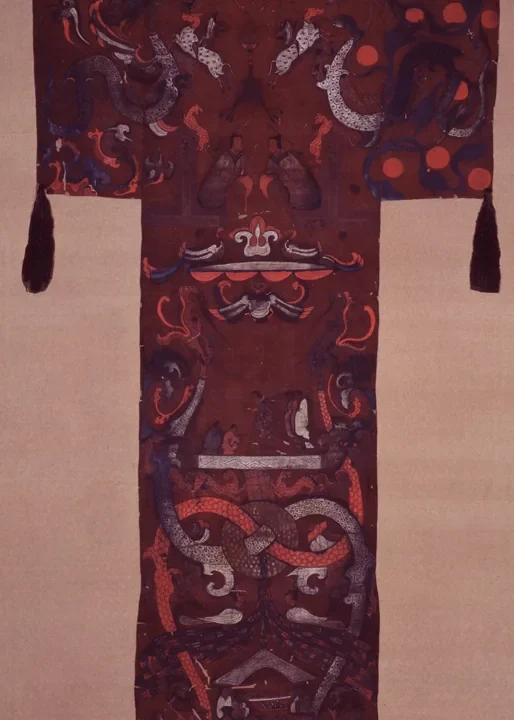
The funeral banner adds a powerful visual record. A silk painting can organize symbols in ways that a short written account cannot fully capture. Reading it needs attention to context, rather than assigning each shape a single modern meaning at first glance.
Silk manuscripts widen the picture again. They preserve writing about subjects that include the sky, divination, and practices of the body. A tomb filled with such texts holds traces of knowledge as well as personal goods.
These objects are strongest when studied together. Clothes show one set of skills. Containers show one more.
Writing and images show ways of viewing the world. No single artifact needs to carry the entire meaning of the burial.
The same silk could serve two very different jobs. One piece could be worn, while another could carry ink. A robe needs a weave that drapes and holds together.
A written text needs a surface on which marks can be read. The tomb gives us both kinds of work, not just one rare cloth.
That is a useful way to read the finds. Start with a thing and ask what its maker had to solve. How could a thin gown hold its shape?
How could a box protect small items? How could a painter place a scene on a curved coffin? Each task puts the craft back in view.
We do not need to name the maker to see that skill. The object holds the result, while the lost name reminds us how much work in the past was done by people the written record does not keep.
A Person Should Not Become Just a Spectacle
Lady Dai's preserved body draws attention, but responsible storytelling keeps her identity and burial context central. The tomb also texts a wealthy social world and many skilled makers. Claims about perfect survival, exact emotions, or a miraculous method go beyond what the finds alone can show.
There is an easy way to make this story shocking: treat an ancient body as a frightening object. That approach loses the person and replaces history with shock. Xin Zhui lived within a family and society before her remains became a museum subject.
Respect does not mean avoiding the facts of survival. It needs choosing what those facts are used to explain. The body can tell us about a burial setting and aspects of health.
It need not be described in a way designed only to startle.
We should also remember the limits of the evidence. An elite burial can preserve rare goods because a household had access to wealth and labor. It does not show that most families owned similar sets or received similar funerals.
That limit is part of the lesson. The tomb records gaps in wealth as well as beauty. Fine cloth and many worked objects imply supplies, skilled making, and decisions about which goods mattered enough to place with the dead.
Much remains beyond reach. We do not know each conversation, daily preference, or private belief of the woman in the tomb. Filling those gaps with firm scenes would make the story smoother and the history weaker.
The remaining silk offers a better ending. It is fragile material carrying a long past. Lady Dai's burial preserved not just a rare body, but pieces of a world that often disappears, including the patient skill of people who helped show that world to us.
Frequently Asked Questions
These questions keep the name, survival, and wider finds linked. They avoid turning one striking feature into the whole account. The body is key evidence, but the nearby objects show why Mawangdui matters for the history of early Han craft, knowledge, and elite burial practice.
Is Lady Dai the Same Person as Xin Zhui?
Yes. Lady Dai is a common name used for Xin Zhui, the woman buried in one of the Mawangdui tombs. The site also includes linked family burials.
Was One Secret Liquid Responsible for Her Preservation?
That is too simple a claim. The sealed burial and its many local conditions need to be considered together, rather than assigning everything to one mysterious ingredient.
What Can We Learn Beyond the Preserved Body?
Silk garments, lacquer objects, paintings, and manuscripts reveal aspects of elite life and burial practice. They also preserve evidence of skilled work and ideas from the early Han period.