

A star's final act may not be the end of planet making. Around a white dwarf called HS 0209+0832, an unusual chemical trail has led teams to propose a world built from material the star cast off as it aged.
This white dwarf planet formation story began in part with old data. Hubble data held spectral features that were hard to name. An updated chemical reference helped teams spot a clue involving niobium.
The proposed world is a second-generation planet candidate. That final word matters. The chemical clues and brightness variations support an intriguing account.
But the system's full history is not a direct seen film.
Picture a stellar system after its first long chapter has ended. The star's core remains, and some expelled material may find a new path. The idea is not that a destroyed planet magically returns.
It is that new material could assemble into a new world.
What a Second-Generation Planet Would Be
A second-generation planet forms from material released during a star's later evolution, instead of from the original disk around a young star. Teams propose such a planet near HS 0209+0832. It would stand for a new episode of formation, not just an old planet that survived its star's changing size.
Earth formed in the early Solar System. So did the other planets we know here. They grew from matter left near the young Sun.
That is the first generation meant in this story.
A white dwarf comes much later in a star’s life. The star has lost its outer layers. Its small, dense core stays behind.
The core can still be hot and bright, so dead star is only a loose label.
The lost gas does not have to stay close. Much of it can escape. To make a new planet, some matter would need to stay in a disk and gather into a body.
That is the hard step in the proposed story. Where does the disk come from? What keeps the gas nearby?
A star that sheds matter does not always leave a neat ring ready to build a world.
The team considers a possible role for a companion star. Its pull could help shape the lost matter. This is a model of a past event, not a scene watched through a telescope.
A second-generation planet would be new, not an old world brought back to life. A survivor formed in the first disk and endured the star’s changes. A new world formed later from a fresh supply.
That gap is easy to lose in the phoenix name. A phoenix returns from its own ashes. Here, the proposed planet grew from what its star cast off.
The metaphor is vivid, but it is not exact.
The phrase stellar remnants names the bodies left after such changes. A world near one does not have to be new. The HS 0209+0832 case needs its unusual chemical clues to support that further claim.
How Starlight Carries a Chemical Clue
A spectrum splits light into wavelengths where elements can leave recognizable features. Teams named unusual niobium signatures in archival data of HS 0209+0832 and compared them with other data. The pattern suggests enriched material reaching the white dwarf, while the proposed source of that material needs more account.
A spectrum is a way to read light instead of only look at an image. Darker or brighter features at certain wavelengths can reveal which substances interact with the light.
Related Reading
The reference data matters. An unknown feature can stay puzzling until laboratory data or databases make a better match possible.
NASA explains the return to Hubble data from 1999 with an updated chemical database. This is an example of old data becoming more useful as the tools for reading them improve.
Niobium is one key clue in the case. Its reported abundance, alongside other elements, led the team to consider material linked with a star's later evolution.
The research also uses data from FUSE to support the chemical account. Agreement between independent data sets can help test whether a feature is real and correctly named.
A white dwarf atmosphere can receive material from nearby objects. That gives teams a way to study the chemistry of material they cannot sample direct.
The method is still indirect. Finding an element in the gas layer does not amount to holding a piece of the proposed planet in a laboratory. Teams infer a source through models and comparisons.
The chemical clue is therefore strong enough to motivate a given idea. But it does not remove each alternative by itself. A full account must fit the whole pattern.
The best part of the cold-case story is this careful link between data and account. A feature that once had no clear name becomes a clue to a possible new kind of world.
What the Brightness Variations Add
TESS found a repeat pattern in the system’s light. The team reads it as a clue to a nearby giant planet. That adds to the chemical case.
It is not a direct photo of the world, and the model still needs to fit errors and alternatives.
Light from a star system can rise and fall for many reasons. A repeat pattern is useful, but it does not name the cause. The team has to test what can make the pattern it sees.
Here the reported cycle is about 4.4 days. The team reads it as a clue to a giant planet close to the white dwarf. The timing gives the chemical case one more piece to explain.
In the proposed picture, the world loses part of its gas. The hot star shines strongly on it. Escaping matter could then reach the star and leave the marks seen in its light.
Accretion is the name for matter gathering onto a body. In this case, it means matter reaching the white dwarf. It does not mean a filmed crash or a whole planet falling into the star.
The chain has several links. A planet must be there. It must lose the right matter.
That matter must reach the star at a rate that fits the data. A good model needs all those links to work.
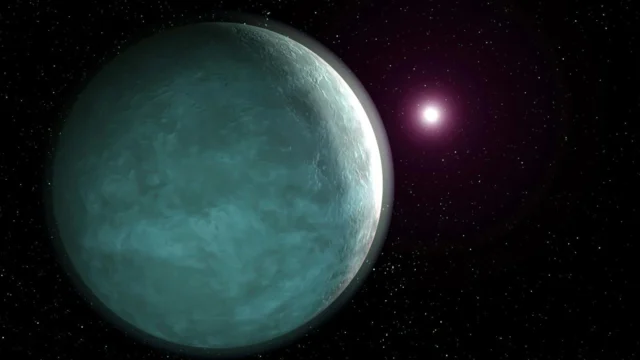
The light pattern does not show the planet’s surface. It also does not show the full path of the gas. Those parts come from a model, so a drawing of them must be labeled as a concept.
Picture two clues on a desk. One is a pattern in the star’s spectrum. The other is a repeat change in brightness.
Each leaves room for doubt. Together they give the team a more focused question to test.
That is what makes the case useful. The data now guide the next search, while the candidate label keeps the result open to checks.
Why a Candidate Can Still Change the Questions
A candidate can guide useful new tests before it is confirmed. Teams can search other white dwarfs for matching chemical clues and light patterns. Better data may support the proposed world or favor another cause.
Both outcomes would help explain this system and improve future searches.
A candidate is not a failure to find something. It is a claim with a clear basis that still needs tests. The label helps show where the work stands.
The next step is to ask what else the proposed world should reveal. Would new light data repeat the same cycle? Would more spectra show the same chemical marks?
Those are questions that can be checked.
Teams can also look at other white dwarfs. If the same pattern appears elsewhere, it may help test the proposed route to a new planet. A single case cannot show how common that route is.
A search needs to record what it can miss. A weak signal may fall below a tool’s reach. Not finding a world is useful only if the test could have seen the kind of world the model predicts.
The model must also explain the disk. New planets need a supply of matter in the right place. It is not enough to say that the old star shed gas and skip the steps between gas and world.
Our own Sun invites a tempting question. Could a new planet form after it ages? This one candidate does not give a firm answer.
A route that may work here need not work in every star system.
Nor does a new world mean a living world. The proposed body is a giant planet in a harsh setting. Life and habitability need their own tests, not a leap from a striking origin story.
The value is in the new question. A stellar remnant may hold more than an old system slowly fading. It may offer clues to a later chapter of planet making, if the candidate survives the checks still ahead.
Frequently Asked Questions
These questions clarify candidate status, the difference between new formation and survival, and the role of drawings. The answers keep the research's central idea without turning an inferred world into a direct imaged one. More data can test both the proposed planet and the unusual formation history attributed to it.
Is the Proposed Second-Generation Planet Confirmed?
The research paper calls it a candidate, and NASA explains it as suspected. The clues supports a proposed account that needs more study.
Did the Planet Survive From the Star’s Youth?
The second-generation account proposes later formation from cast-off stellar material. That differs from a first-generation planet that survived the star’s evolution.
Is the Featured Image a Photograph of the Candidate?
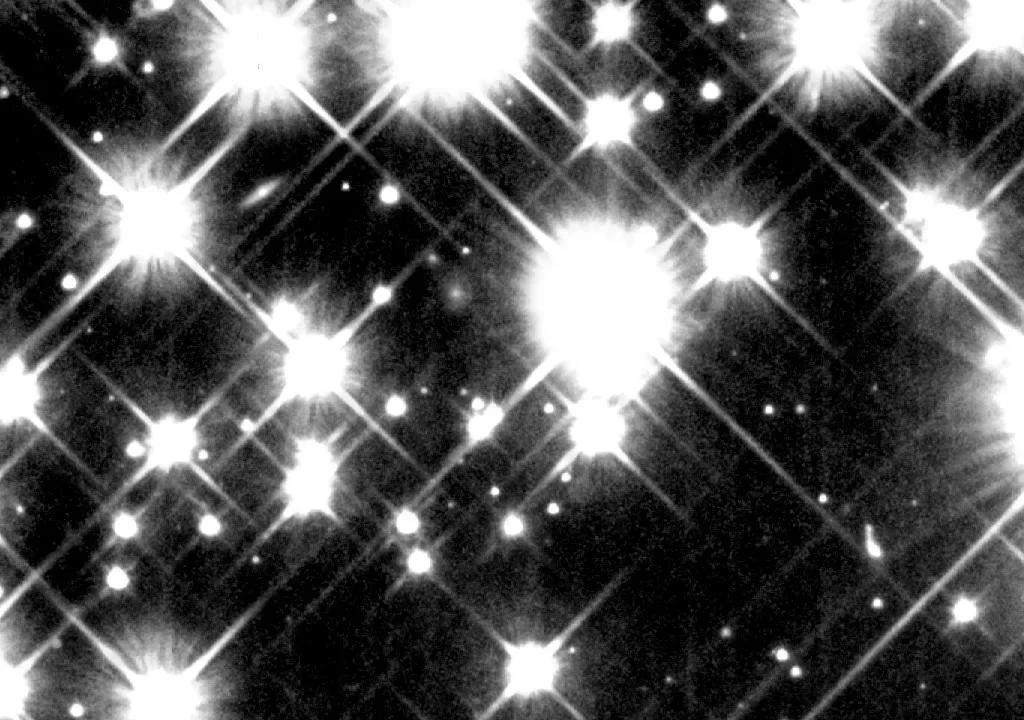
The featured image is a labeled Hubble view of white dwarf stars. It is not a direct photograph of the proposed planet near HS 0209+0832.
.jpg)