The Moon can look almost unchanged from one night to the next. Yet a rock can strike its surface and create a scar large enough for an orbiter to study in detail.
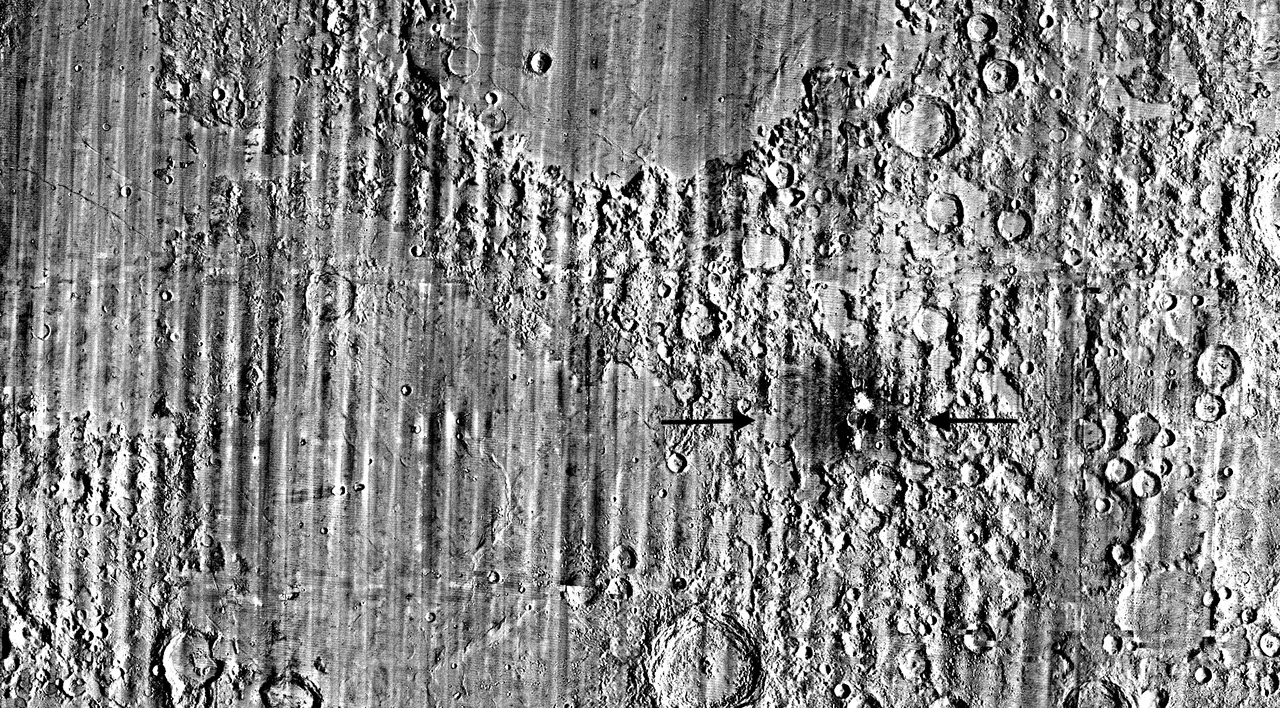
NASA's Lunar Reconnaissance Orbiter has helped record the McGetchin crater, a new lunar impact crater formed in 2024 and set out in a 2026 report. The exciting part is not just its size. Teams have images from before and after the impact.
That changes the question. An old crater may hold a long and unclear history. A new one offers a much tighter time window and a chance to watch the aftermath while it is still fresh.
Imagine two photos of the same patch of ground. One has no crater. The other has a new dark hollow and bright material around it.
The difference is a record of a real change, though the impact itself may not have been seen as it happened.
How Researchers Know the Crater Is New
Before and after images show that McGetchin crater formed between April 11 and May 22, 2024. This brackets the event without assigning an exact moment. The comparison makes the crater notably useful for studying recent impacts, because teams can separate its fresh changes from much older marks on the surface.
The date range comes from data that frame the event. One image shows the earlier surface. A later one shows the new feature.
The impact happened between those views.
That is distinct from an eyewitness record. Teams do not need to have watched the incoming rock to show that the ground changed within a known interval.
Before and after images work best when their differences are understood. Sun angle, shadows, and camera geometry can alter the look of a place without changing the terrain.
A convincing new crater therefore needs more than a dark spot in one frame. The shape and surrounding material must fit a physical impact feature.
The Lunar Reconnaissance Orbiter offers repeated views of the Moon. That archive lets teams search for changes across time rather than judge every crater from a single image.
A narrow formation window adds real research value. It allows teams to study how fresh material looks and how its temperature behaves soon after the event.
The word century in news coverage ca sound like an exact waiting schedule. Impact rates are statistical estimates. They do not promise that a similar event will arrive on a given date.
One rare event also does not define the full rate. Teams compare many data and account for what the cameras could or could not find.
The new crater is thus both a striking object and a time marker. It gives teams a surface whose recent history is better constrained than that of most lunar craters.
What a Fresh Impact Does to the Ground
An impact excavates a hollow and throws material outward, creating ejecta around the crater. The visible pattern depends on the impact and the local surface. Bright rays, shadows, and exposed material give clues.
But none alone gives a full measure of the incoming object's size, speed, or exact path.
A crater is the result of a rapid transfer of energy. The incoming object's motion matters, as do its traits and the ground it strikes. The final hollow can be much larger than the object.
That is why measuring the crater does not directly measure the rock. Teams use models and physical assumptions to infer a likely impactor size. The result is an estimate with limits.
Related Reading
The material thrown outward is called ejecta. It may cover older terrain and expose fresh surfaces. The pattern can help teams study how the impact unfolded.
Lunar geology also affects the result. A surface with layers, buried rock, or distinct grain sizes may respond differently from a simple uniform model.
A bright patch is not necessarily a glowing patch. In a visible image, brightness often explains reflected sunlight. A separate instrument is needed to study heat.
Shadow can reveal relief. But it can also hide detail. A crater viewed under a low Sun may look very distinct from the same crater viewed when the Sun is higher.
These differences are useful when read together. One view can emphasize shape, while another makes surface material easier to compare.
The scene is vivid enough without a made-up explosion sequence. A rock arrived, energy moved into the ground, and material spread outward. The images record the aftermath, while models help explore the short event that produced it.
That mix is the strength of impact science. Direct data anchor the story, and calculations fill in possible processes without pretending to be photos of the moment itself.
Why Temperature Adds Another View
Heat data add a view that normal photos cannot give. NASA’s Diviner instrument measures how the crater stores and releases heat. Rocks and fine grains may cool at distinct rates.
Those changes help teams study the fresh surface without confusing reflected light with warmth.
On Earth, air and weather shape how a surface warms and cools. The Moon has a very distinct setting. Its exposed ground responds strongly to sunlight and the long cycle of lunar day and night.
A rocky patch may retain heat differently from fine loose material. That contrast can help name changes in the surface after an impact.
Diviner measures thermal radiation. It does not work like a normal camera that records reflected visible light. The gap matters when an image is colored to show temperature.
A red area on a thermal map is a visual label for data. It is not necessarily how the crater would look to an astronaut standing nearby.
NASA's report explains thermal data from late 2025 into early 2026. Those data add another stage to the crater's study after its 2024 formation.
The time gap is useful to explain. A discovery announced in 2026 can concern an event from 2024 and data taken later. Report, view, and formation are separate dates.
Thermal facts can test an interpretation based on visible images. If a surface appears rocky, its heat behavior may offer a way to check that idea.
The two kinds of data do not need to agree in every visual detail. They measure distinct traits. A careful study asks how those traits fit together.
This makes a fresh crater more than a new dot on a map. It becomes a small laboratory for learning how exposed lunar material behaves after a violent change.
What the Crater Means for Future Moon Work
Recent impacts show that the Moon's surface still changes. That matters for research monitoring and for plans to place equipment or people there. One crater does not give a full risk forecast.
But it adds clues that teams can use alongside wider impact rates, shielding studies, and mission design.
The Moon's lack of a thick atmosphere leaves its surface exposed to incoming objects in a way unlike Earth. That broad fact matters. But it does not turn every location into an equal risk at every moment.
Impact monitoring helps teams estimate how often distinct events occur. The estimates depend on view coverage, the size of features that can be found, and the length of the record.
A large recent crater is notably noticeable. Small impacts can also matter for equipment. A mission plan needs the full spread rather than only the most dramatic examples.
The same reasoning applies to asteroid fragments in a headline. The object that made a crater must be inferred from clues and models. A name for its origin should not be invented from the shape alone.
For future surface operations, planners can consider shielding, equipment placement, and monitoring. These are engineering choices based on many sources of risk, not a panic response to one image.
The research value may be even broader. Fresh craters help test ideas about old ones, whose surfaces have changed through long exposure.
A known formation window offers a baseline. Teams can return to the site and compare later data with the early record.
That is the quiet promise of McGetchin crater. The scar is dramatic. But the archive around it is just as key.
The Moon has changed in a place we can measure, and those data can keep improving long after the first news story fades.
Look up at the Moon and it still seems calm. The new crater reminds us that calm looks can hold a busy physical history, one fresh mark at a time.
Frequently Asked Questions
These questions clarify the event's timing, the difference between crater and impactor size, and the meaning of brightness. The answers show why image comparisons and thermal data give distinct kinds of clues. A fresh crater becomes notably useful when those data are joined without confusing one for another.
Was the Impact Watched at an Exact Time?
The published window comes from before and after images. It places formation between April 11 and May 22, 2024, rather than naming one seen second.
Is the Impactor the Same Size as the Crater?
No. A crater can be much larger than the object that made it. Impactor size is estimated using models and assumptions about the event.
Does a Bright Crater Image Mean It Is Hot?
Not necessarily. Visible brightness concerns reflected light. Thermal instruments give a separate measure of heat.