A house burns down, and centuries later its hardened clay becomes the clearest trace that the house ever stood there. Destruction can preserve a record that ordinary weather would erase.
That is the unsettling starting point for Cucuteni Trypillia burned houses. Across parts of eastern Europe, prehistoric settlements have left striking evidence of fire.
Some burning may have been deliberate. But a burned floor is not a confession, and one explanation cannot be assigned to every site without further work. The real question lies in the pattern: what burned, how it burned, and what people did before and after the flames.
Who lived in these settlements?
The Cucuteni-Trypillia cultural world spread across parts of present-day Romania, Moldova, and Ukraine during the later Neolithic and Copper Age. Its communities left distinctive pottery and settlement remains. Some later Trypillia sites grew very large. These different places and periods should not be treated as one uniform village with one custom.
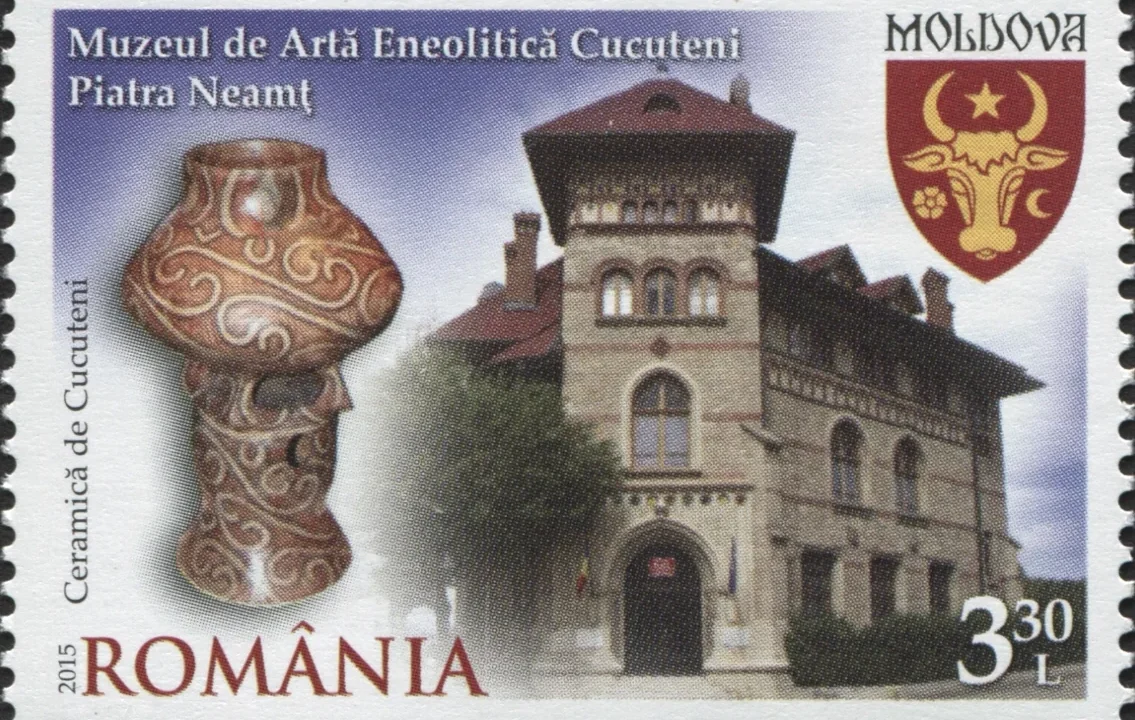
Painted vessels often introduce this culture to museum visitors. Their patterns show skilled work, but a beautiful pot is only one part of a household economy.
People needed food, tools, shelter, and relationships with their neighbors. Cultivation and other forms of resource use supported those needs in changing local environments.
Settlement plans can reveal how houses related to one another. Large sites raise further questions about gathering, occupation, and the organization of shared space.
The number of buildings does not directly tell us how many people lived there at the same time. Some estimates depend on whether every structure was occupied together.
That distinction matters before discussing fire. A site with a long sequence of building and rebuilding can leave a very different record from one settlement destroyed all at once.
The cultural label helps researchers compare material. It does not erase variation. Understanding the burned houses starts with placing each example in its own landscape, period, and settlement history.
What survives after a house burns?
Walls made with clay and organic supports can leave hardened, broken material after intense fire. Archaeologists study the color, structure, temperature effects, and position of those remains. Burned clay can preserve details of construction. The evidence must still distinguish a house fire from other heating, later disturbance, and the collapse sequence.
An unburned clay wall may soften and disappear as weather reaches it. Fire can change the material, making pieces last long after the original building is gone.
Impressions may preserve traces of wooden supports or other construction details. The remains become a negative image of material that no longer survives.
Their position also matters. A fallen wall does not necessarily lie where it stood, and a roof collapse can move objects around a room.
Researchers therefore document the debris carefully before removing it. A plan can reveal relationships that a loose fragment in a museum case cannot show.
Heat changes are evidence of a physical process, not evidence of a motive. A person may have started the fire deliberately, or a different sequence may have produced the same broad result.
The investigation needs both chemistry and context. Knowing that a fragment became hot is one step. Explaining why an entire house burned is a larger question that must connect many observations.
Could the burning have been deliberate?
Deliberate house burning is an important hypothesis at some Cucuteni-Trypillia sites. Researchers assess fuel requirements, fire intensity, patterns of destruction, and what remained inside buildings. Evidence for intentional burning does not automatically reveal its purpose. Renewal, ritual, disposal, and conflict are distinct explanations that require different supporting clues.
A house does not always burn completely simply because someone applies a flame. Material, ventilation, weather, and added fuel influence what happens.
If the archaeological record suggests sustained high heat across a building, investigators can ask whether ordinary household contents were enough to produce it.
Experimental work helps explore that question. Reconstructed materials can be burned under recorded conditions, allowing researchers to compare the results with excavated remains.
Even a strong case for deliberate fire leaves motive open. People might destroy a structure after its useful life, mark an important transition, or respond to conflict.
A ritual interpretation should explain more than intensity. The position of objects, repeated practices, or other patterns may make it more convincing.
The distinction between action and purpose is essential. Evidence may show that people helped a house burn while leaving us uncertain about what that act meant to them. Admitting that uncertainty keeps a physical result from becoming an invented ceremony.
Why a cycle is harder to prove than a fire
Popular accounts describe communities burning houses on a fixed schedule. A repeated pattern is possible, but exact intervals require reliable dating and clear connections between construction phases. Different buildings and sites may have different histories. The phrase house burning should not become a universal timetable unsupported by local evidence.
A repeated event can look regular when a summary compresses many examples. The underlying dates may have broad ranges rather than exact years.
To establish an interval, researchers must identify the beginning and ending of comparable phases. Reused material and disturbance can complicate those measurements.
The unit of comparison matters as well. One family's rebuilding history is not the same as the history of a whole settlement.
A large site may contain neighborhoods that changed at different times. The evidence should not be forced into a synchronized cycle merely because a neat story is easier to remember.
This does not eliminate the possibility of customary destruction or renewal. It changes the claim from every house burned on schedule to specific patterns that can be investigated.
That narrower approach is more useful. It permits archaeologists to find variation, rather than treating variation as an inconvenience to hide. The culture becomes a field of human choices instead of one repeated dramatic act.
The surprise inside large settlement plans
Trypillia megasites reveal arrangements of buildings on a scale that challenges simple pictures of early village life. Geophysical surveys can map structures without excavating every one. Their patterns raise questions about shared organization and occupation. Large plans show complexity, but they do not by themselves establish kings, a state, or continuous dense urban living.
A map drawn from buried features can make an ancient settlement visible before its walls are exposed. That allows researchers to compare many buildings while limiting disturbance.
The plan may show rows, open areas, and differences in building size. Those relationships help identify questions for targeted excavation.
A large structure could have supported activities beyond one household. Yet its precise use needs material evidence, not only its footprint.
Likewise, a huge settlement area does not guarantee that every resident lived there throughout the year. Researchers examine food remains, objects, buildings, and chronology to assess patterns of use.
Fire becomes part of that larger investigation. The distribution of burned buildings may connect with settlement change, but the relationship must be demonstrated.
The result is a more demanding picture of early community life. Cooperation, movement, and shared spaces may take forms that do not match a familiar modern city. The megasites invite us to study those forms on their own terms.
What the flames can and cannot tell us
Burned houses preserve evidence of building methods, household material, heat, and change. They cannot directly preserve the reasons people spoke aloud before a fire. The best explanation combines experiments, dating, settlement patterns, and excavated context. It keeps the possibility of deliberate action separate from certainty about ritual or an exact repeated schedule.
The fire is both a loss and a source. It destroyed a building while helping some details survive in a form researchers can study.
That double role gives the topic its strange pull. A moment of destruction may offer more information than decades of quiet use.
But archaeological imagination must stay tied to the material. We should not invent a procession, a farewell speech, or a universal belief simply to make the scene feel complete.
The available evidence already supports a vivid story. People built homes from local materials, lived within organized communities, and sometimes left structures transformed by powerful heat.
What happened afterward is especially important. Rebuilding, movement, or the end of occupation can help distinguish a turning point from a disaster.
The hardened clay remains modest in the hand. Its value lies in the questions it can still answer, and in the discipline of leaving unanswered questions open rather than covering them with a beautiful but unsupported tale.
Frequently Asked Questions
Did every community burn its houses deliberately?
That should not be assumed. Researchers evaluate individual sites and destruction contexts, and different fires may have had different causes.
Do burned houses prove a ritual?
No. Fire intensity may support intentional action without revealing its motive. A ritual explanation needs additional contextual evidence.
Why does burning help preserve prehistoric homes?
Heat can harden clay components and preserve impressions of vanished supports. The surviving debris can reveal construction details that weather might otherwise erase.