A painted wall can invite a remarkable question: what if it hides a doorway? In Tutankhamun's tomb, that question has helped keep the search for Nefertiti's burial in the public eye for years.
The Nefertiti hidden tomb evidence story combines a compelling theory with a key negative result. Nicholas Reeves proposed that features in the tomb might point to concealed spaces. A later radar study concluded that there were no hidden chambers immediately next to the burial room.
Those facts should be kept together. A revived headline about a possible secret room is not the same as a newly confirmed chamber, and a room would still need clues before being named as Nefertiti's burial.
Imagine studying a high-resolution image of an ancient painted wall. A line seems to suggest an earlier opening. The line is real enough to examine.
The history behind it is a separate claim that must be tested.
The Hypothesis and the Evidence Are Different
The hidden-tomb theory proposes that features in KV62 may indicate concealed spaces and a possible link to Nefertiti. It is not a confirmed burial find. Testing the idea needs structural and archaeological clues, while naming a person's tomb would demand more clues beyond the mere presence of a room.
KV62 is the designation for Tutankhamun's tomb in the Valley of the Kings. Its famous contents make any proposed hidden extension notably attention-grabbing.
The attraction of the theory is understandable. An surprising room could change the story of how the tomb was used. Yet the most striking possible outcome is not clues that it happened.
Nicholas Reeves has argued for a link between the tomb's features and a concealed burial. The argument needs to be assessed through its given data, not through the fame of the person proposed to lie beyond the wall.
Nefertiti burial questions are broader than KV62. A negative result in one place does not reveal where she was buried elsewhere.
The reverse is also true. An unresolved burial location does not make a proposed room more likely by itself. A gap in knowledge is not positive clues for the most appealing answer.
A useful test begins with a narrow question: is there a space behind this wall? If the answer were yes, more questions would follow about its date, access, use, and contents.
Those stages should not be skipped. A cavity could have more than one account. A structural feature is not always a royal burial chamber.
The story becomes clearer when each claim has its own clues. A line in an image, a room behind a wall, and Nefertiti's resting place are three distinct propositions.
That separation lets the mystery stay open without allowing it to outrun the findings. It also gives teams a more exact target for any future study.
What the Radar Surveys Found
The third KV62 radar study found no hidden rooms right beside Tutankhamun’s tomb. The survey took place in 2018. Its result weighs against the proposed nearby spaces.
It does not locate Nefertiti elsewhere, but any renewed claim about those walls must address this finding.
Ground-penetrating radar sends signals into a structure and records reflections. Changes in materials or spaces can affect those reflections. The method needs careful collection and study.
Radar surveys are not X-ray photos of a wall. The output is a pattern of signals that specialists study using the instrument's behavior and the site's settings.
Related Reading
Earlier surveys made conflicting accounts. The third study aimed to resolve doubt through a systematic approach.
Teams from the Turin-led team concluded that no hidden chambers lay immediately next to the tomb. That is a large result, not a minor footnote to a more exciting plan.
A renewed theory should explain how it fits that result. It may test a method, propose a distinct location, or offer new clues. Simply repeating the original idea does not remove the negative finding.
The scope of the result also matters. Right adjacent spaces are the tested claim. The result should not be expanded into a statement that each part of the Valley of the Kings has been searched fully.
This is how archaeological uncertainty can be handled well. State the question, state the test, and state the result within its boundaries.
A negative result can feel disappointing because it does not reveal an object. In research, it can still remove a plausible option or force a theory to become more exact.
The search for Nefertiti remains intriguing. The radar finding helps keep that search linked to what the tomb itself has, and has not, revealed.
Why Wall Images Need Careful Interpretation
Close images can show paint, texture, and faint lines. They cannot prove a room lies behind a wall. A line may have several causes.
Teams need structural tests and the site’s history before turning a surface pattern into a claim about a hidden royal burial.
High-resolution images are valuable because they keep details that may be hard to see in normal light. They allow teams to compare areas and revisit data without touching the surface.
That access can also encourage pattern-seeking. A faint line may look like the edge of a door once the idea of a door has been suggested.
The problem is not that patterns are useless. It is that more than one process can create them. Building, plaster, painting, damage, and later change may all leave marks.
A proposed doorway should therefore be tested against the wall's structure. Does the line match a known building feature? Does one more method support a space behind it?
The painted scene raises a separate question about artistic and past account. An argument about a figure's identity is not the same as clues for a real opening.
Teams can make both arguments. But they need to show where one ends and the other begins. Joining them too quickly can make a theory appear better backed than it is.
A digital scan also has limits. Lighting and processing may stress some features. Captions and methods help readers grasp what the image actually records.
The best use of an image is to generate a clear, open to tests question. It should not be treated as a stand-in for each other kind of clues.
A wall can hold a rich history even if it hides no room. The study of its making, decoration, and changes remains valuable without the promise of a secret royal burial.
How to Keep the Mystery Honest
A sound account calls the hidden-room idea a hypothesis. It includes the negative radar result and asks what new data a report adds. The search for Nefertiti is wider than KV62.
Keeping those points clear lets readers enjoy the mystery while seeing its limits.
A headline can bring an old plan back into view without a new excavation or measure. Readers should ask what changed since the previous report.
Was there a new survey? A new study of existing images? A revised account?
Those are distinct developments and should be named plainly.
The date of the news story is not always the date of the clues. A 2026 article may discuss a theory from years earlier. Without that setting, the story can look like a fresh find.
Tutankhamun tomb coverage also draws on the public's familiarity with its treasures. A photo of a famous object can make an unrelated claim feel more concrete. The image does not show the hidden space.
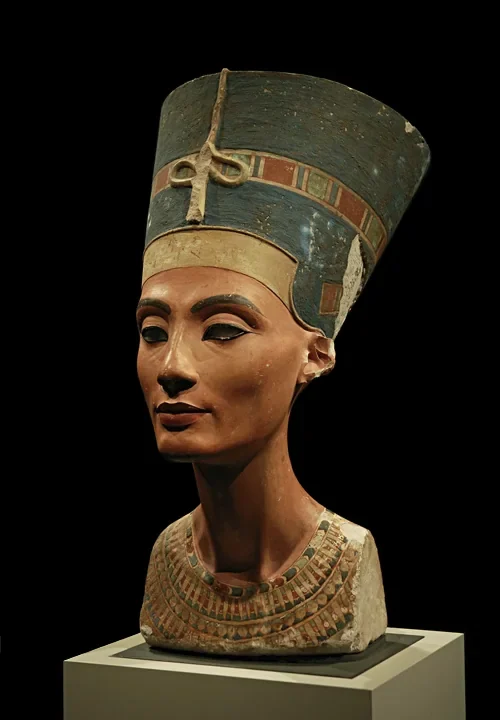
The same caution applies to a portrait bust of Nefertiti. It explains who she was. But it is not clues of where she was buried.
A strong article can still create atmosphere. The quiet tomb, painted walls, and unanswered burial question are real sources of fascination. There is no need to invent a sealed doorway that has been proven open.
Future work may refine what teams know. If new clues appears, it should be compared with the existing studies instead of announced as though those studies never happened.
For now, the most sound account holds the tension. The theory is compelling. But the radar result weighs against hidden chambers right beside the burial room.
That is an honest mystery: a question with reasons to ask it, reasons to doubt a proposed answer, and a clear idea of what clues would be needed next.
Frequently Asked Questions
The answers separate a proposed burial from a confirmed find. They also keep wall patterns apart from structural tests. Radar can weigh against one location without showing where Nefertiti lies.
The larger burial question remains open, but the tested walls provide a specific result to address.
Has Nefertiti’s Tomb Been Confirmed Behind KV62?
No. The hidden-burial idea remains a theory. The reviewed radar study found no hidden chambers immediately next to Tutankhamun’s tomb.
Can a Line in a Wall Scan Prove a Hidden Door?
No. Surface lines can have several causes. Structural clues and independent tests are needed to show an opening or space.
Does the Radar Result Tell Us Where Nefertiti Was Buried?
No. It addresses proposed spaces near KV62. It does not name her burial place elsewhere.