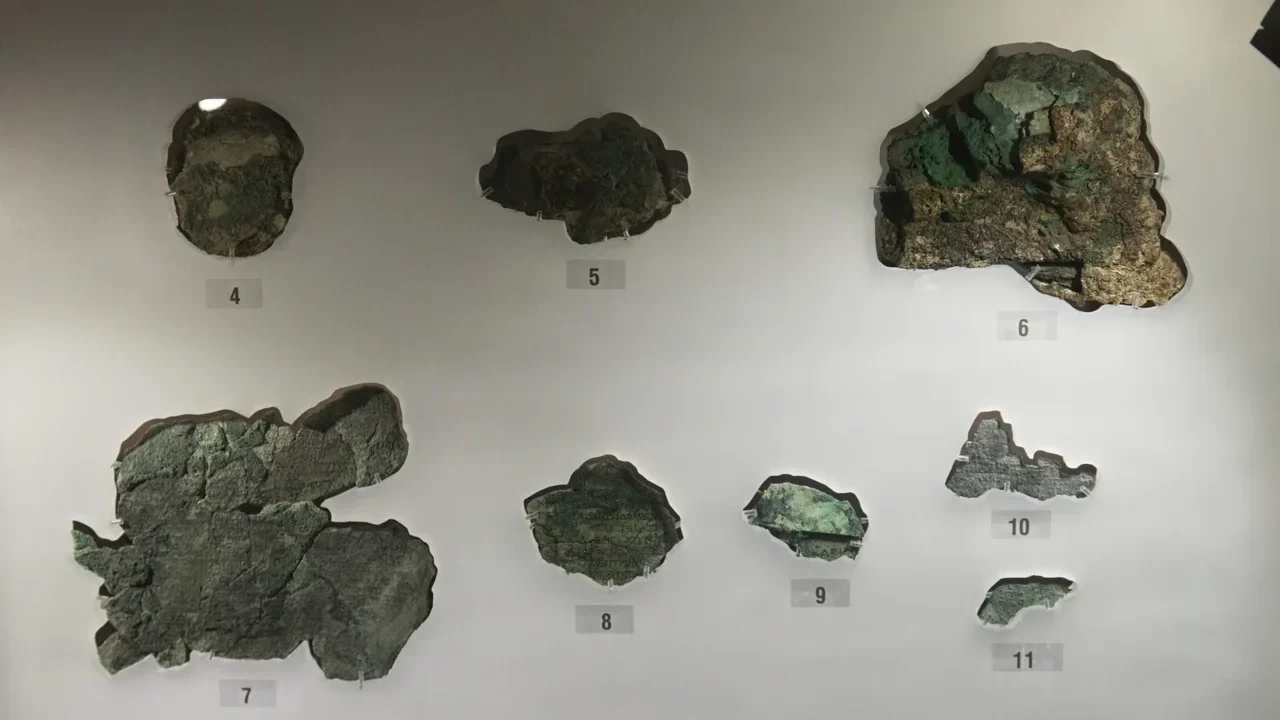


A corroded lump from an ancient shipwreck contained teeth. They were not animal teeth, but the edges of bronze gears. The fragments came from a machine that could turn sky cycles into positions on a dial.
Antikythera mechanism eclipses are part of what makes the object so striking. It was not an electronic computer and did not observe the sky for itself. It used a crafted arrangement of gears to stand for patterns people had learned from the heavens.
Only part of the device survives. That gives the story two tracks: what the fragments show directly, and what modern teams model to explain the missing whole. Keeping those tracks apart is how the ancient machine becomes clearer.
The Wreck Preserved Parts of a Mechanical Sky
The Antikythera mechanism was found in a shipwreck near a Greek island in the early twentieth century. Its bronze fragments contain gears and texts. The device was an astronomical calculator; Much is missing, so researchers must reconstruct the whole layout from the pieces and clues that survive.
The wreck held other objects, including sculpture, which made the small corroded pieces less obvious as a treasure. A bronze mass can look unpromising until a gear edge or inscription gives it a distinct meaning.
The device came from the ancient Greek world and traveled on a ship that later sank. Its manufacture and the shipwreck are separate events. Dating the wreck does not automatically give an exact year for making the machine.
The device's left pieces are often described as 82 fragments. That number refers to the modern state of the find, not to 82 parts at first intended to be assembled separately by the maker.
Around 30 gearwheels survive in some form. More may have belonged to the complete design. A planned total depends on a model and should not be presented as if each gear remains available to count.
Bronze corrosion changed the object and joined material into hard-to-read masses. The challenge was not simply to polish the surface. Teams needed ways to look inside without destroying the evidence they wanted to grasp.
Texts helped identify what the device stood for. Words can connect a dial or cycle with a sky purpose. Their location and readability matter, most of all when only parts of a text survive.
Calling it a gear-driven sky captures the idea without making it mystical. The device stood for sky patterns through physical links among gears. Its power came from accumulated space science and skilled engineering, not from watching the sky with hidden modern sensors.
Cycles Can Predict When an Eclipse Is Possible
The device used sky cycles, including the Saros cycle linked with recurring eclipse conditions. Gears converted those numerical links into dial movement. Such a display could indicate eclipse options and linked data; it did not guarantee that each predicted eclipse would be seen from the user's location.
An eclipse depends on the alignment of the Sun, Earth, and Moon. The Moon's orbit does not place it in the right alignment at each new or full moon. Repeating links among its motions help explain when eclipse conditions return.
The Saros cycle is about 223 lunar months. It is useful because a few lunar periods nearly line up again after that interval. The near-repeat does not mean the event seems in exactly the same place on Earth.
The Metonic cycle relates 235 lunar months to about 19 solar years. That link helps connect lunar months with the year. The device's calendar work and eclipse work draw on linked but distinct patterns.
Gear ratios turn numbers into movement. A wheel with one tooth count drives one more with a distinct count, changing the rate of rotation. A series can combine ratios to stand for a long cycle within a compact device.
Related Reading



The eclipse dial is therefore a physical model of timing. It depends on what people already knew about recurring patterns. The machine does not need to sense a shadow in space to advance its pointer.
Local view is one more question. An eclipse may occur without being seen from one specific place. The distinction is key when describing prediction, because timing a possible event and telling a viewer exactly what will appear overhead are not the same tasks.
The machine's feat is still extraordinary. It places a large sky cycle within the reach of a hand-operated device, using gear teeth and a display to turn learned patterns into something a user could follow.
A hand turning one wheel can move several pointers at different rates. That is the simple idea behind the harder gear train. A small turn at the handle need not mean the same turn at every dial.
Tooth counts set the links, and the links give each pointer its pace.
The user then reads a scale rather than doing each sum again. The work has been built into the object. This does not make the model perfect or free from limits.
It makes learned cycles easier to consult. A machine can store a rule in its form, just as a written table can store a rule in rows.
X-Rays Reveal a Record the Surface Hides
X-ray imaging and surface techniques have revealed internal gear forms and faint texts in the corroded fragments. These methods helped teams grasp the back dials and propose front displays. The measures constrain models, but a successful digital model is still a model rather than the found complete machine.
Looking inside a fragile artifact changes the questions teams can ask. A gear hidden by corrosion may reveal its size and tooth count through imaging. A surface text may become readable under a distinct light or analysis method.
X-ray CT records many views that can be combined into a three-dimensional view. The result lets a team study internal layers without cutting the fragment apart. It is most of all valuable when a few features overlap in a small mass.
The image still needs reading. A split piece can appear to create two forms where one existed. A damaged edge can make a tooth count uncertain.
The best model has to account for those options rather than treat each shadow as a clear part.
Teams also use the texts as constraints. If a text describes a display, a model should explain how that display fits the left form. Gears alone may allow many arrangements, while text and dimensions narrow the choices.
The 2021 UCL work planned a model for the front Cosmos display. It aimed to match physical and inscription evidence, including view of the Sun, Moon, and planets known in antiquity. Its success is a claim to be tested, not a declaration that each missing detail is now certain.
Computer modeling makes a plan easier to examine. It can show whether parts fit and whether ratios make the intended movement. A physical build adds other questions about tolerances, friction, and workable assembly.
The distinction between fragment and model keeps the science honest. The old bronze supplies limits. New tools help explore arrangements within them.
Neither the doubt nor the impressive model should erase the other.
The Ancient Computer Label Needs an Explanation
The mechanism is called an ancient analog computer because it represented sky patterns through physical movement. It did not work like a programmable electronic laptop. The label needs that distinction; the object shows skilled ancient craft, while its maker, original use, and full design remain partly uncertain.
Computer is a broad word. A device can calculate through physical movement without electronic circuits. In this case, turning gears changes displayed positions according to fixed links built into the device.
An analog computer stands for quantities through physical states, such as angles. That is a better account than imagining a hidden screen or software stored within the bronze. The machine's rules lived in its building.
The device also challenges a simple picture of ancient technology as crude. Fine gearing and sky cycles show demanding knowledge. The conclusion should remain tied to the left object and linked evidence, rather than turning one find into proof of each lost invention people might imagine.
The maker is not securely identified. Neither is each stage of the device's ownership or use. A link to a famous ancient scientist can be an interesting plan, but a famous name does not become proven because the craftsmanship is impressive.
Its rarity is also hard to read. Metal objects can be recycled, damaged, or lost. A lack of left examples does not show that no linked devices ever existed.
But it also does not show how common they were.
The real past feat sits between those extremes. At least one skilled sky device traveled through the ancient world. Parts of it survived underwater, and modern work has found enough form to explain major functions.
The corroded gear teeth return us to the beginning. They are small physical marks with a large implication: people once built a compact machine that made the sky's patterns turn under a hand. The missing parts keep the inquiry open, while the left ones make it real.
Frequently Asked Questions
These questions define prediction, math work, and model, the three ideas most often blurred in accounts of the device. The answers keep its feat clear without adding new circuits or total certainty. A partial ancient object can show striking skill while still leaving room for competing models and further tests.
Could the Mechanism Predict Eclipses Everywhere?
Its cycles could indicate eclipse conditions and linked data. Whether an eclipse was seen from a specific place is a separate question.
Was It an Electronic Computer?
No. It used gear-driven gears and dials to stand for links. The analog-computer label describes that physical math task, not new circuits.
Is the Full Original Design Now Certain?
No. Key functions are well supported, but much of the device is missing. Front-display models and other models must be distinguished from the left fragments.