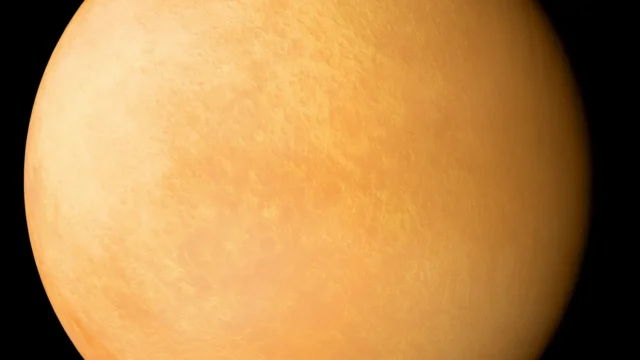

The planet nearest the Sun has places where sunlight never reaches the ground. In those dark hollows, ice can last while nearby plains bake under fierce daylight.
Mercury water ice sounds like a mistake in a school science quiz. It is a reminder that distance from the Sun is only part of a world's story. A crater wall, a slight tilt, and the flow of heat can matter just as much at one small spot.
No spacecraft has landed in one of these frozen pits. The case was built from a group of signals that fit together, each doing a different job. Following those clues is a small lesson in how we learn about a place we cannot yet touch.
A Shadow That Survives the Seasons
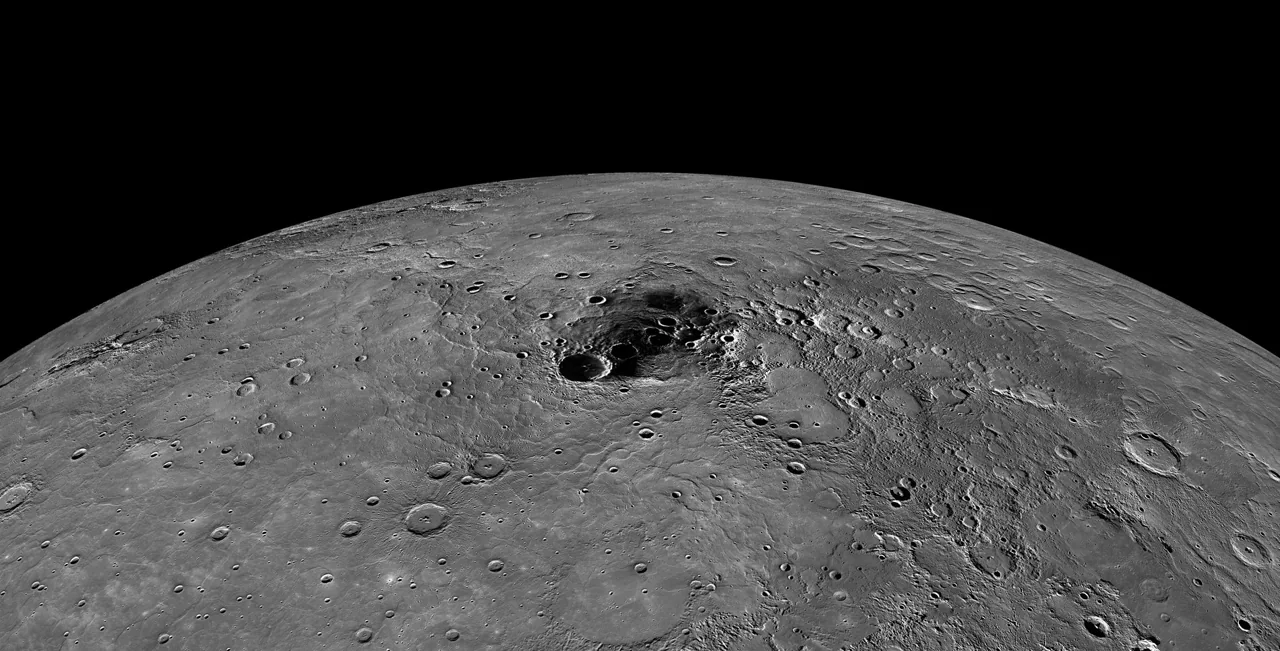
Mercury's small tilt keeps the Sun low near its poles. Deep crater walls can block direct sunlight from parts of the floor all year. These sites remain far colder than sunlit ground, allowing ice to survive in a world that is often described only by its extreme heat.
Imagine standing at the bottom of a deep bowl with the Sun just above the rim. Raise the walls high enough, and their shadow can cover you even while the land outside stays bright.
Near Mercury's poles, the low Sun and the shape of polar craters can make that picture real. The planet's axis has only a small tilt. The Sun does not climb high enough in the local sky to light every part of a deep hollow.
Such places can remain in permanent shadow. The phrase means no direct sunlight reaches that spot across the seasons. It does not mean no heat of any kind can get there.
Warmth can still move through the ground or arrive from nearby surfaces. Scientists must model those paths to find out which sites stay cold enough for ice, and at what depth.
That is why not every dark patch is automatically an ice store. Shape, location, and heat all matter. A shadow is the start of the question rather than the full answer.
Mercury also has no thick atmosphere to carry heat around like Earth's air. Large differences can persist between places with very different exposure to the Sun. A single average temperature hides the conditions that matter most inside a crater.
The Bright Echo From a Dark Place
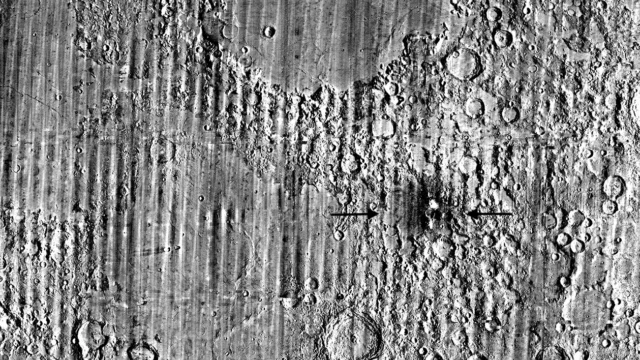
Earth based radar first revealed unusually bright returns near Mercury's poles. Ice was a possible explanation because of how it reflects radio waves. MESSENGER later added measurements of hydrogen, surface reflectance, and local temperatures, building a stronger case than a bright radar patch could provide by itself.
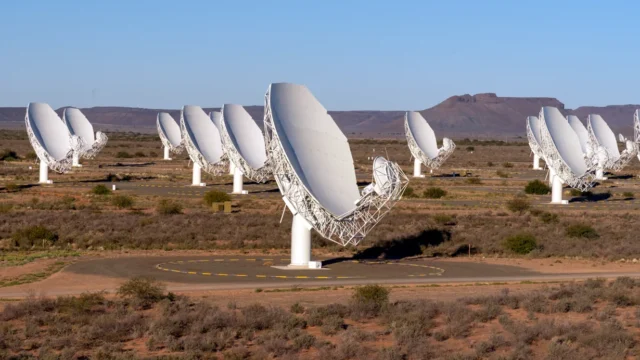
The first big clue did not look dark at all. Radar observations in the early 1990s found radar-bright deposits near the poles. These features returned radio waves in a way that made frozen water worth considering.
But radar brightness is not a label stamped on a material. Researchers had to ask whether another substance or a rough surface might produce a similar result. A good idea needed more tests.
MESSENGER became the first spacecraft to orbit Mercury in 2011. From there, its tools could examine the planet far more closely than an Earthbound telescope could.
One instrument counted neutrons. These tiny particles can escape the ground after high energy particles from space strike it. Hydrogen changes the way the neutrons lose energy, leaving a signal that scientists can measure.
Related Reading
Water contains hydrogen. A strong hydrogen signal near the same polar regions therefore supplied an important new clue. It did not act alone as a direct photograph of ice.
Laser measurements helped map the land and study how the surface reflected light. Heat models tested whether frozen water would remain stable in the mapped shadows.
In 2012, the combined findings gave strong support to polar ice. Several different tools pointed toward the same explanation. That agreement is what makes the story stronger than a surprising image on its own.
The order of the clues matters too. A radar result suggested a target worth study. The orbiting probe then supplied independent tests of that idea.
The later evidence did not merely repeat the first image; it examined a different property of the material in the same region.
Ice Under a Dark Blanket
Some of Mercury's polar ice may lie exposed in the coldest places, while other deposits sit below a dark surface layer. That cover can help ice persist at sites where the very top is too warm. Carbon rich material is one proposed part of the cover, not proof of biology.
A person looking for ice might expect every deposit to shine. Mercury complicates that simple picture. Some polar areas are bright in laser data, while others have a dark surface layer.
Think of a blanket over a frozen store. The top of the blanket and the ice beneath it need not share the same temperature. A layer of soil or other material changes the way heat reaches the buried deposit.
Thermal models can test which depths stay cold enough. In the coldest parts of some shadows, ice can remain close to or at the surface. In warmer parts, a protective cover can make a difference.
Researchers have proposed that dark, carbon rich material may be mixed into the story. Impacts could have delivered both water and compounds that later changed under Mercury's harsh conditions.
The word organic often causes confusion here. In chemistry, it can refer to carbon based compounds. It does not by itself mean a substance came from a plant, animal, or microbe.
Nor is every detail of the dark cover settled. Its exact makeup and history are questions for further work. The ice evidence is stronger than a claim that one specific event supplied every molecule.
Separating those levels of certainty keeps the discovery exciting without stretching it. We have good reason to place frozen water in the poles. We do not yet have a complete biography for each dark patch above it.
How Water Reached a Hot Planet
Comets, asteroids, and other processes may have supplied water that later gathered in Mercury's cold traps. Once water reaches the surface, most sites do not preserve it well. The protected polar deposits can therefore hold clues about both delivery from space and the conditions that let a small fraction remain.
A world does not have to form with a neat ice shelf to end up with frozen water. Impacts can deliver fresh material long after a planet takes shape. Small particles also arrive over long spans of time.
The challenge is keeping what arrives. On a hot, exposed surface, water does not simply sit in an open puddle. Molecules can escape or move on, while harsh sunlight and particles from space alter the surface.
Cold traps offer a different fate. If water reaches a place cold enough to hold it, some of it can remain. Over time, these special sites can collect material that would not last elsewhere.
That idea helps explain why the poles matter so much. They are not a sign that the entire planet is secretly frozen. They are places where the rules of heat create a rare storehouse.
It also makes the Moon a useful comparison. Both worlds have polar regions where shadows can shelter frozen material. The details differ, so findings from one world must be tested rather than simply copied to the other.
Mercury water ice is thus a story about geography as much as distance. A world close to the Sun can still hide dark corners. A small change in the angle of incoming light can change what survives for a very long time.
The larger lesson is easy to carry back to Earth. To understand an environment, ask about the actual place, not just the name of the planet. A crater floor and a sunlit plain can belong to the same world while keeping very different histories.
Mercury has not broken the laws of heat. Its shadows show how carefully those laws must be applied.
A future sample could sharpen that history, but the existing discovery does not have to wait for a person with a shovel. Science often works by joining several partial views. The strongest account is the one that explains them together while leaving its remaining gaps in plain sight.
Frequently Asked Questions
Mercury's ice raises three linked questions: where it sits, how it was detected, and what nearby dark material means. The key is to distinguish local polar conditions from the planet as a whole, and strong evidence for frozen water from less certain ideas about its source.
Where is water ice found on Mercury?
The best evidence places ice in permanently shadowed regions near the poles, including crater floors. Some deposits are exposed, while others are thought to lie under a dark cover.
Did MESSENGER photograph an icy ocean?
No, the discovery concerns polar deposits rather than an open ocean. Radar, neutron measurements, laser data, and heat models together support the ice interpretation.
Does organic material on Mercury mean life?
No, carbon rich compounds can form and arrive through processes unrelated to life. Their possible presence in a dark cover is a chemistry question, not a detection of organisms.
Sources and Further Reading
Explore Space & Universe for more planets, cosmic discoveries, and the missions exploring beyond Earth.