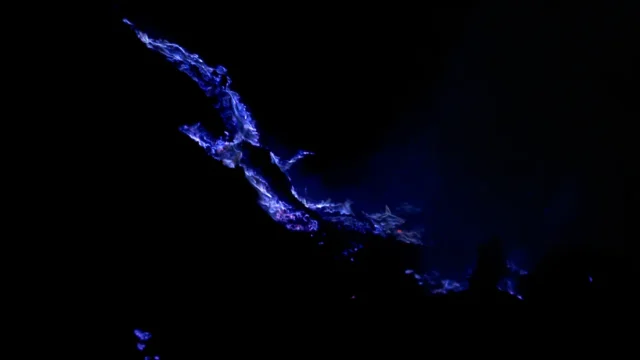
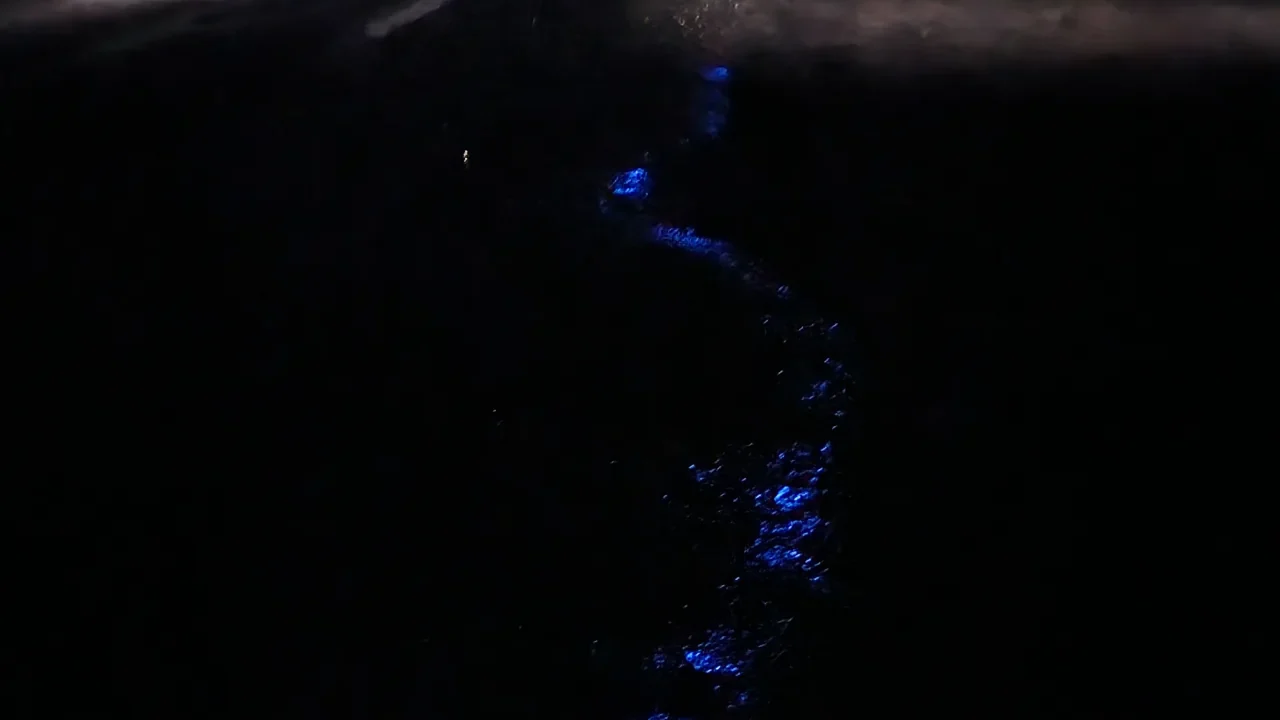

A wave breaks on a dark beach, and its edge turns blue. The light follows the moving water, then fades. A moment later, one more wave draws a fresh bright line.
The shore seems to have borrowed a strip of sky.
The Maldives glowing beach is not a line of lamps hidden in the sand. Living things in the water can make the light. Many are so small that a visitor would never notice a single one in daylight.
The famous phrase Sea of Stars describes a sight, not a fixed nightly show. The glow depends on what is alive in the water and on the conditions around it. That makes the real story more subtle than a travel photograph, and much more alive.
The Light Comes From Life in the Water
Glowing surf often comes from bioluminescent plankton, including some dinoflagellates. These tiny living things can release light through a chemical reaction. Movement in the water may trigger brief flashes; When enough glowing cells gather, the light becomes seen across a wave, a splash, or a boat's wake.
Bioluminescence means light made by a living thing. It is not the same as reflecting moonlight. It is also different from a material that absorbs light earlier in the day and glows after dark.
The water contains living things that can start a chemical reaction themselves.
Dinoflagellates are a diverse group of tiny life forms. Some make their own food using light. Others eat smaller living things.
Many do not glow at all. Calling each speck of plankton a tiny blue light would turn a rich living community into one simple type.
In living things that do glow, substances involved in the reaction are often called luciferin and luciferase. The names refer to the light-producing material and the agent that helps the reaction occur. The details differ among species.
Nature has arrived at glowing systems in more than one way.
The blue glow can feel cool and quiet because the reaction produces light with little of the heat we associate with a flame. A bright wave does not mean the water has suddenly become hot. Color and temperature are separate parts of this scene.
Scale explains why the beach looks so striking. One tiny flash is easy to miss. Thousands or millions of brief events close together can trace the moving water.
The wave gives their scattered light a shape our eyes can follow.
It helps to think of the surf as a crowd. No single cell needs to light the whole shore. Each contributes a small part at the place where the water moves.
The effect grows from many small reactions happening near one another, rather than from one hidden source beneath the beach.
Why a Wave Can Trigger a Blue Flash
Water movement can stimulate light-producing cells. A breaking wave, moving fish, or passing boat may create enough disturbance for flashes to appear. In some species the response may help deter feeding animals; the exact role depends on the living thing, so one explanation does not fit each glow.
A still patch of water and a breaking wave may contain the same tiny living things yet look different after dark. The gap can be motion. The wave bends, churns, and presses on the cells.
Their response makes that motion seen for a short time.
This is why pictures often show a bright edge to the surf. The light marks a zone of active water. The quieter sea behind it may look black even though it contains living cells too.
Darkness is not proof that the living things have left.
The idea of light as defense can seem odd. A bright flash might appear to reveal a small creature to hungry neighbors. But being noticed can affect a feeding animal as well.
Related Reading


A flash may startle it or make its activity more seen to one more predator.
These ideas are studied as functions of light, rather than stories about what one cell is thinking. A dinoflagellate does not plan a show for visitors. Its reaction is part of the way it meets the world around it.
Other sea life also uses light. Some fish, squid, jellyfish, and bacteria have glowing skills. The shapes and roles of their signals differ.
A blue beach is one small window into a much wider ocean pattern.
That wider pattern matters when a photograph has no field notes. Color alone cannot identify a species. A blue glow seen in the Maldives and a blue glow seen on one more coast need not come from exactly the same living thing.
To identify the source well, researchers need samples and observations from the place and time of the event. A camera can capture a beautiful clue. A microscope can help explain which life forms made it possible.
Why the Sea of Stars Is Never Guaranteed
The seen glow depends on glowing living things being present in enough numbers and on darkness, water movement, and local conditions. The phrase Sea of Stars does not name a permanent attraction with a reliable nightly schedule. Photographs also vary because cameras can record light differently from human eyes.
A beach does not keep the same water from one evening to the next. Currents move it. Winds mix it.
Living populations grow and decline. The result is a place that may produce a fine display at one time and little seen light at one more.
A plankton bloom is a rise in the number of plankton in an area. The word does not automatically mean a glowing event. Some blooms glow, some do not, and some involve species that can harm people or wildlife.
The color of an online photograph cannot settle those questions.
Darkness changes the view as well. A faint glow is easier to notice when other light does not compete with it. Moonlight, nearby buildings, and bright screens can all change what a person sees.
Two observers may describe different views of the same water.
Camera exposure creates one more layer. A camera left open for longer can gather light over time. A photograph may blend flashes that the eye saw as separate events.
That does not make the image false. But it can change the expectation it creates.
Ask what a picture actually records. Was it a single brief exposure? Was the color adjusted?
Does the caption give a place and a date? These details help turn a striking image into useful evidence, rather than an implied promise of a daily show.
Vaadhoo is well linked with the Sea of Stars name in travel writing. Yet bioluminescent waves are not unique to one island. Similar events occur on other coasts around the world.
The living process is broader than the famous place name.
The calmest way to understand the scene is to allow it to be changeable. It is an encounter with a living sea, not a display that the shore can switch on to order.
What a Bright Beach Reveals About the Ocean
A glowing beach makes tiny marine life seen at human scale. It shows how chemical reactions, animal interactions, and water movement can combine into a large scene. The beauty does not establish that the water is safe to enter, and an unidentified bloom needs local guidance rather than guesswork.
Much of the ocean's life is easy to overlook because it is small. We notice a bird above the surf or a fish near the surface. We may not notice the cells carried in each small cup of water.
A glowing night briefly reverses that imbalance.
The tiny living things become the main event. Their light can draw attention to how active the water already was. The wave did not become alive when it glowed.
The glow gave a seen signal of life that was there before.
This can also change how we read a beach. Sand and water seem like simple ingredients. In fact, the edge of the sea is a meeting place for nutrients, drifting cells, fish, and shifting physical conditions.
A brief blue line can come from that whole setting.
The view should not be used as a water-quality test. Bioluminescence tells us that light is being made. It does not identify all living things present, reveal pollutants, or measure the risk of contact.
Local advisories are a better guide than the beauty of the color.
The same care applies to photographs used in stories. A picture of glowing surf from one more country can explain the process. But it should be labeled as context.
It should not be passed off as proof of a specific night on a Maldivian island.
There is a quiet pleasure in keeping the explanation accurate. Knowing that tiny cells make the light does not remove the wonder. It places the wonder within reach of life science, where a small reaction can become a whole shore's bright edge.
The next wave will not be a perfect copy of the last. Its light will follow its own moving water, fade, and leave the beach dark again. That short life is part of what makes the sight striking.
Frequently Asked Questions
These answers address the three details most often lost behind bright beach photographs: timing, the source of the light, and water safety. They help set realistic expectations while keeping the living process clear. A beautiful blue wave is a living event, not a guaranteed nightly service.
Is the Sea of Stars Visible Every Night?
No. Seen light depends on the living things present and the conditions at the time. A famous beach name or a bright photograph cannot guarantee a display on one more night.
Is the Blue Glow Really in the Sand?
The glow in surf comes from living living things in the water. Light may appear along wet edges as water moves, but the sand itself is not the source of that chemical light.
Does Glowing Water Mean It Is Safe to Swim?
No. A seen glow does not identify the whole bloom or test water quality. Follow local guidance about water conditions and contact with unknown blooms.
Sources and Further Reading
Explore Science & Discoveries for more research, clear explanations, and the evidence behind new findings.