

A blue mark on a white shirt can look like a laundry problem until it appears again after sweating. The sight is startling because we expect sweat to be clear. Yet colored marks can arise through more than one process.
Blue sweat causes include settings in which sweat itself is colored and situations in which normal sweat changes color after it reaches the skin. Those options should not be treated as one diagnosis.
A reported case can draw attention to the puzzle. But a photo of a stain cannot name its cause. The timing, body area, products used, and clinical findings all matter.
Imagine trying to solve the problem from the shirt alone. You can see the result. But not the route that made it.
A careful medical check works backward from that result, testing accounts instead of choosing the most unusual one first.
Colored Sweat and Colored Sweat Marks Differ
Chromhidrosis means colored sweat. Pseudochromhidrosis means color develops after sweat reaches the skin. A blue mark can fit more than one path.
A clinician needs the whole history and an exam, because appearance alone cannot show whether pigment came from a gland or from the surface.
The word chromhidrosis sounds like a full answer. But it names a group of unusual sweating. It does not tell a reader the cause of each blue stain.
DermNet distinguishes true colored sweat from pseudochromhidrosis. In the latter, material on the skin can add color after sweat is released. The clear result may look similar even though the process differs.
That difference matters for check. If the color comes from the surface, the clinician asks distinct questions than if a gland is making colored fluid.
Sweat color can also be confused with color from clothing. A damp shirt may release dye. A mark noticed during sweating is not always pigment made by the body.
The first question is therefore descriptive. Where did the color appear, and when? Clear data help more than an early label chosen from a search result.
A news case should not be used to diagnose someone else. Two people can show a similar color for distinct reasons. Even the same person may face a changing set of exposures.
Clinical assessment can separate those options through history, examination, and tests when needed. A photo may help record the pattern. But it cannot supply the whole answer.
The unusual color makes the story memorable. The useful lesson is more normal: a clear effect can have several causes, and naming the effect is not the same as explaining it.
That is why a calm, exact description is a better starting point than an alarming guess about what blue must mean inside the body.
Where the Pigment May Come From
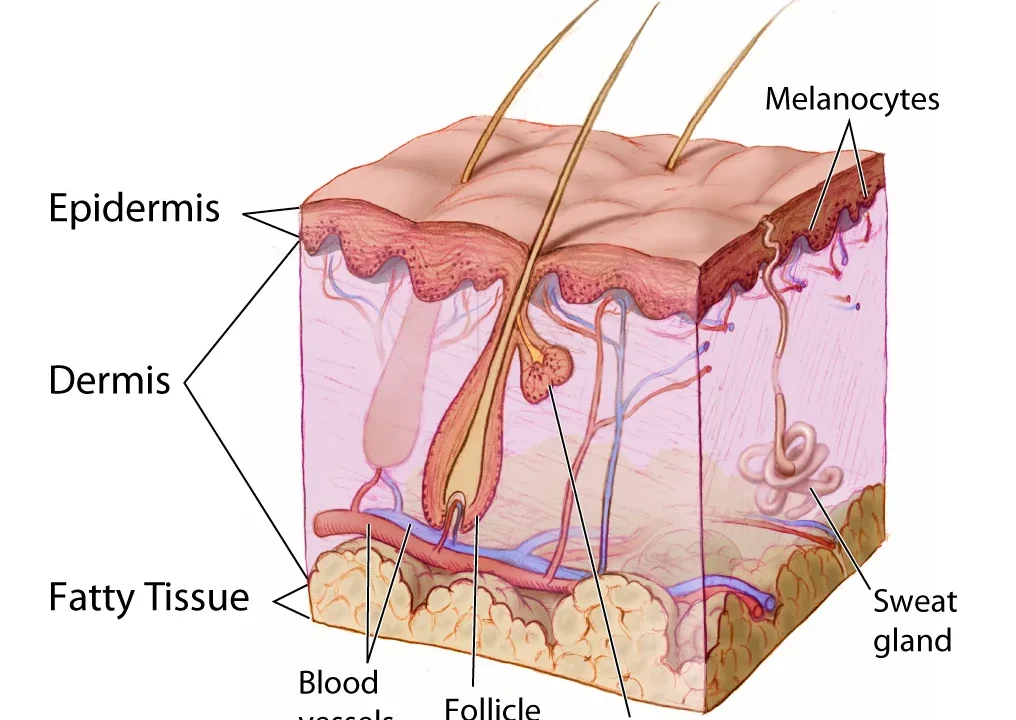
Pigment may arise within sweat glands or from substances and living things on the skin surface. Clinicians also consider dyes, products, and other exposures. The options depend on the pattern and findings in the personal case.
So a broad list should guide questions instead of function as a self-diagnosis checklist.
Skin pigments are only one part of the story. Materials that touch the skin can also leave color, notably when moisture helps them spread or transfer.
A clinician may ask about lotions, cosmetics, clothing, work materials, and medicines. The question is not an accusation about poor hygiene. It is a way to trace what changed before the color appeared.
Related Reading


DermNet explains apocrine chromhidrosis in relation to pigment within certain sweat glands. It also explains surface causes of pseudochromhidrosis. These are distinct processes, not interchangeable names.
Some living things can make pigments on the skin. Their role must be assessed in a case instead of assumed from a color. Blue alone does not name a given microbe.
Products can complicate the picture because labels do not always show how they behave with sweat or fabric. A stain may become obvious only when the skin or shirt is damp.
The body area adds one more clue. A pattern limited to one region may suggest distinct questions from color seen over a wide area. It still does not settle the cause by itself.
The same is true of lasting change. A one-time mark after a new garment is distinct from repeat unexplained staining. Both deserve sound description.
But they may need distinct follow-up.
The goal is to find a backed account, not the most exotic account. A rare diagnosis should stay one option among others until the check narrows the field.
This is a good example of how clinical reasoning works. Several routes can lead to the same clear result. History and examination help reveal which route best fits.
What a Useful Clinical History Includes
A useful history records when the color began, where it appears, whether it affects skin or fabric, and what exposures changed. Clinicians may ask about symptoms, products, clothing, and medicines. These details help guide check.
But they do not replace examination or justify starting treatment from an online article.
A clear timeline can be more helpful than a dramatic photo. Did the color begin after a new shirt, product, or work task? Does it recur under the same settings?
The answers need not prove causation to be useful. They help name options worth checking. A change that happened around the same time may be useful or may be a coincidence.
It also helps to distinguish color on the skin from color only on a garment. The two may connect. But the location of the mark is clues that should be recorded well.
Other symptoms matter. Pain, rash, illness, or a change in broad health can alter the clinical picture. An article cannot decide which details are large for a given person.
Readers should avoid stopping a prescribed medicine or applying strong treatments on the basis of a stain. Those choices need appropriate medical guidance.
A photo can record a mark that fades before an appointment. It is a record of look, not a test that identifies the pigment.
Case reports can show how one check unfolded. They are useful teaching examples. But they do not show that all similar stains have the same cause.
A good clinician also considers the option that the apparent pattern has one more account. The process is not a race to attach a rare label.
The most helpful role for a reader is to explain what happened plainly and seek check when the change persists or causes concern. The medical work begins with that record, not with a sure diagnosis from color alone.
Why the Blue Color Does Not Tell the Whole Story
Color alone does not show the cause or the right treatment. Some stains come from the surface, while others involve sweat glands. The whole case matters.
Lasting unexplained changes should be assessed by a clinician rather than called harmless or dangerous only because they are blue.
Our eyes are good at noticing a contrast. Blue on white stands out right. They are much less good at telling us the chemistry behind that contrast.
A shade can vary with lighting, fabric, concentration, and moisture. A phone image can alter it more. Even a very clear picture remains a partial measure.
This is why the phrase blue sweat causes should introduce a careful account instead of a single answer. The same search can lead to several medical and nonmedical options.
A clinical label also does not tell the whole personal story. The effect may be embarrassing or disruptive even when it is not linked with a serious illness. That experience deserves attention.
The reverse is also true. An unusual color should not distract from other symptoms that need check. A clinician considers the person, not only the stain.
Treatment depends on the cause. A surface exposure and a gland-related state may need distinct approaches. Generic do-it-yourself treatment can miss that gap.
The reported case that inspired this article is therefore a doorway into a broader account. It is not used here as a confirmed diagnosis for the reader or as proof of one universal process.
The mystery becomes less frightening when its parts are separated. Sweat, skin, products, fabric, and view all play possible roles. The task is to work out which ones apply.
A shirt can show that something changed. It cannot explain why on its own. That final step belongs to a thoughtful medical check and a clear account of the whole situation.
Frequently Asked Questions
These questions separate a clear blue mark from a medical diagnosis and explain the limits of photos. They also show why treatment should follow an check of the cause. The same color can arise through distinct pathways.
So a useful response considers the whole pattern instead of the stain alone.
Is Blue Sweat Always Chromhidrosis?
No. Normal sweat can become colored after reaching the skin, and fabric or products may also add. Clinical assessment is needed to distinguish the options.
Can a Photograph Identify the Cause?
No. A photo records look. History, examination, and sometimes testing are needed to name the source of the color.
Should I Treat a Blue Stain With Antibiotics or Harsh Cleaners?
Do not start such treatment from an online guess. Lasting unexplained staining or linked symptoms should be assessed by a healthcare professional.
Sources and Further Reading
Explore Human Mind & Body for more psychology, human biology, and research on how we think and live.