
The birds did not sign a treaty, seize a capital, or declare win. Yet a short Australian effort in 1932 became famous as a war the emus won. The name is a joke built around a real failure to solve a farming problem with army force.
Great Emu War explained means looking past the punch line. Farmers faced crop damage during hard financial times. Officials sent a small army party to help.
The birds moved through a broad landscape in ways that made the plan far less effective than its supporters had hoped.
The event is strange, but its lesson is useful. Wildlife, farming, politics, and local terrain do not always fit the tools chosen for them.
A Farming Crisis Became a Military Operation
In 1932, farmers in Western Australia sought help with emus damaging crops. The government sent a small army party equipped with machine guns. The event is commonly called the Great Emu War; But it was a wildlife-control effort rather than a formal war between armies.
The setting was farmland in Western Australia's wheat-growing region. Crops stood for food and income, not a harmless patch of plants. For people under money worries, repeated damage could feel like a serious threat to a year's work.
Some farmers were veterans settled on the land after the First World War. That background helps explain why military assistance could appear to be a possible answer. Well-known tools and well-known institutions can seem sound when one more problem becomes urgent.
Emus move across large areas in response to food and water. Farmland can offer attractive supplies, most of all when the wider landscape changes with seasons and weather. The birds were not ordering an attack on the settlers.
The effort used a very small army group. Popular images of an army marching against a mass of birds overstate the scale. The mismatch was between a small control plan and a mobile population spread across hard ground.
Period newspaper coverage shows that the event attracted interest and criticism at the time. The comic framing did not arise only from modern internet culture. People already found the contrast between army language and birds striking.
Yet the joke can hide the farmers' problem. Crop losses were real concerns, even if the chosen response was poorly matched to them. A fair history keeps the financial need and the working failure in the same view.
The starting point is therefore not birds declaring war. It is people asking for help, officials choosing a method, and a landscape full of birds whose movement did not fit that method well.
The Landscape Did Not Cooperate With the Plan
Emus could scatter and move through wide areas, making a small armed party an ineffective solution to the larger problem. Terrain and the birds' behavior small the effort. The well-known claim that the emus won expresses the failure of the plan, not a literal army win by the birds.
A large number of birds does not mean one compact group standing still. Members and smaller groups can spread out. A method aimed at one place may leave most of the wider problem untouched.
That is the basic difficulty behind the effort's reputation. Army gear can be powerful while still being poorly suited to a task. Power is not the same as coverage, precision, or lasting effectiveness across farmland.
Related Reading


The ground matters too. Fields, scrub, distances, and access routes affect where people and vehicles can go. A plan imagined from a fixed position may work differently when the target is mobile and the landscape is uneven.
The emus' behavior was not evidence of human-like tactics. They did not study the gear or organize ranks. Their normal response to disturbance was enough to make a small effort struggle.
Some popular retellings describe each retreat as a battle and each scattered group as a clever formation. The language is funny. But it can turn animal behavior into a fictional command structure.
The true story is stronger when the metaphor stays seen.
Noted numbers for birds killed, ammunition used, and birds present vary across accounts and phases. An exact total should be tied to a specific record. Combining estimates from distinct dates can create a false final score.
The outcome is clear without a scoreboard. The army approach did not give the lasting control the farmers needed. That is what gives the win joke its basis, while leaving the birds as birds and the effort as a failed human plan.
Newspapers Made the Contrast Memorable
News accounts used army language and humor to describe the effort, helping the story last as a strange episode. Newspaper images and captions record events but also frame them. Later versions often sharpen the joke and leave out the crop damage and financial stress that farmers faced.
A newspaper has to make an event legible quickly. Calling the event an emu war creates an immediate contrast. Readers know what a war is expected to involve, and the birds do not fit the expectation.
The phrase therefore works as a headline before it works as a careful account. It can bring attention to the story while also shaping what people think happened. A reader may imagine a larger force and a more formal contest than the records support.
The National Library of Australia's Trove archive preserves period coverage. Looking at dates and pages helps separate reports during the effort from later summaries. A caption can reveal what the newspaper wanted to emphasize at that moment.
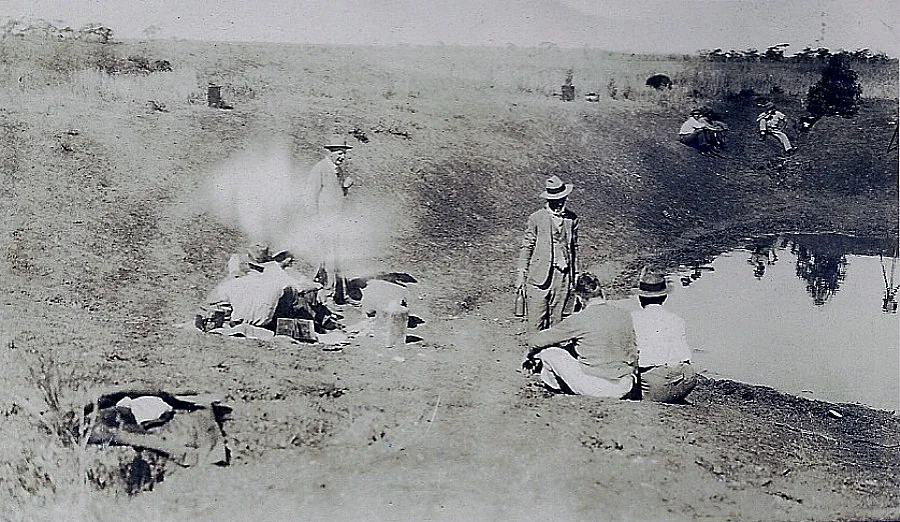
Images also need context. An image of soldiers resting records those people in a setting. It does not automatically show a defeat, a surrender, or the entire outcome.
A caption should not ask the image to prove more than it records.
The effort's failure was politically useful to critics and striking to humorists. Those purposes can coexist with factual telling. The task for a later writer is to identify the claim and the kind of source supporting it.
Modern memes add one more layer. They often reduce the event to a simple result: Australia lost to birds. That is a fine joke as long as the reader knows the literal event was a short attempt at wildlife control.
The archive makes the story richer than the meme. It brings back farmers, government choices, useful limits, and the way public language turned a local problem into an enduring national oddity.
A Wildlife Problem Needs More Than a Dramatic Tool
The emu event illustrates a mismatch between a useful problem and the chosen response. Long-term wildlife management depends on habitat, movement, farming systems, and evidence about what works. A short armed effort could not resolve all those factors; the lesson is about design and policy, not instructions for harming birds.
A lasting solution has to match the scale of a problem. If damage occurs across many farms and seasons, a method focused on a few moments may fail even when it works locally. The broad need cannot be measured only by one day's result.
Fences and other approaches appear in period discussion, including newspaper images of birds being directed toward barriers. Their presence shows that the army effort was not the only way people thought about the issue.
Each method has costs and limits. It can affect other species, change movement, or need maintenance. A policy needs to weigh those effects as well as immediate crop protection.
The strange past event does not supply one easy modern answer.
The birds also belong to the landscape. Farmland changes supplies and boundaries within that landscape. The problem arises at the meeting of wildlife needs and human making, rather than from a species becoming an enemy in a moral sense.
That distinction changes the tone of the ending. The emus did not deserve punishment for winning, and the farmers did not deserve to become only a joke. Both the ecological setting and the human pressure need to remain seen.
The most useful humor points toward the mismatch. A powerful tool was brought to a task it could not solve well. The striking result warns us to ask whether the response fits the behavior and scale of the problem.
The birds walk out of the story without medals. What remains is a human decision, a hard landscape, and a comic name for a real working failure. That is enough to make the Great Emu War strange, and enough to make it worth a close look.
Frequently Asked Questions
These questions keep the well-known joke tied to the actual event. They explain what kind of effort took place, what the win phrase means, and why a precise scoreboard can be misleading. The event is most useful when its farming context remains seen beside its enduring humor.
Did Australia Officially Declare War on Emus?
No. The name describes an army-assisted wildlife-control effort in 1932. It was not a formal war between governments or armies.
Did the Emus Really Win?
The phrase means the effort failed to give the intended control. The birds did not organize an army win or negotiate an outcome.
Why Are Exact Kill and Ammunition Totals Disputed?
Reports cover distinct phases and include estimates. A sound total must be linked to a specific record rather than assembled from unrelated numbers in later retellings.
Sources and Further Reading
Explore Strange & Unusual for more extraordinary places and events, with context behind the surprise.